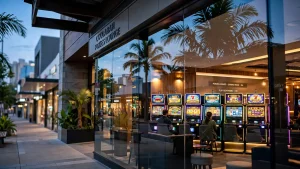
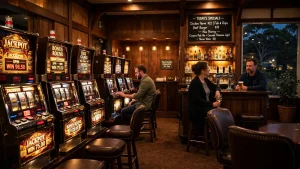
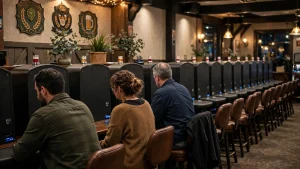
Location listings can point to a venue, but they do not establish machine availability, visitor access or current operating details.
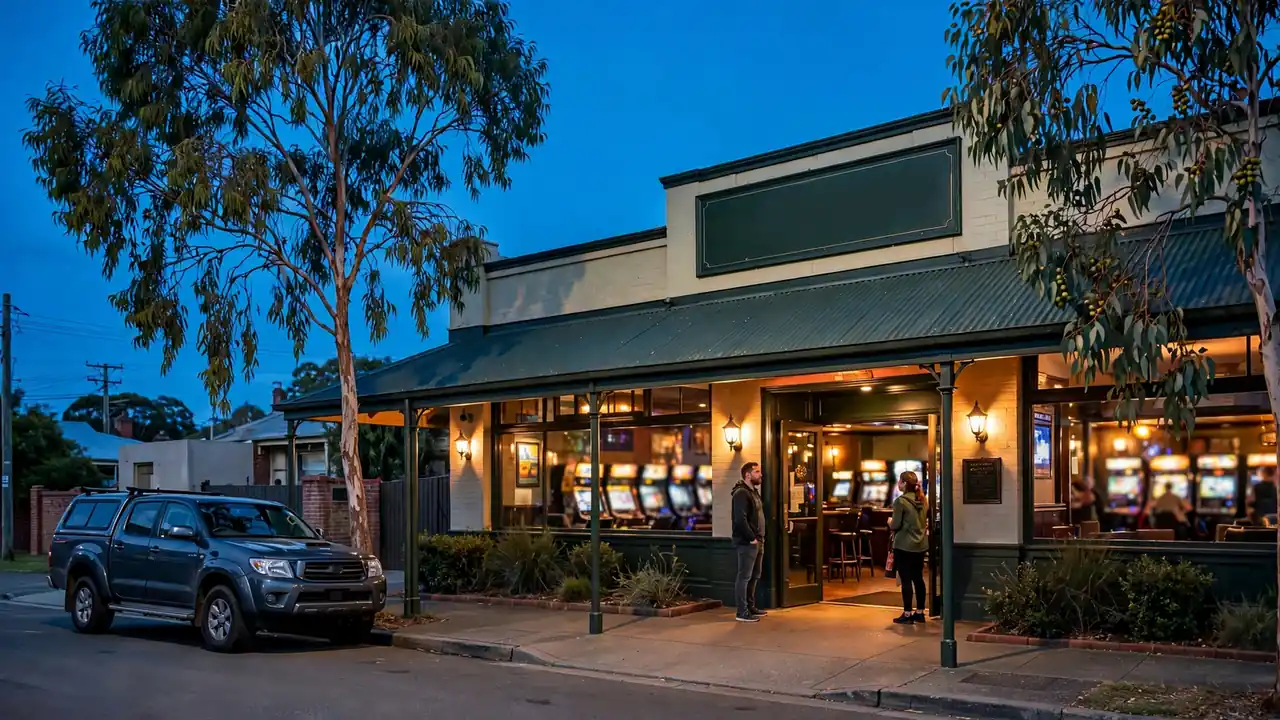
A request for pokies near Sydney can mean several different things: a venue within a short trip, a place in a particular suburb, or simply an option that appears close on a map. Those are not equivalent. A location result identifies a possible lead; it does not establish that the venue has pokies, that they are available to visitors, or that the listing is current.
The distinction matters because map pins and venue names can carry more certainty than the information behind them. A business may be nearby but have no gaming machines, or a listing may describe a broader venue without confirming what is available on site. A result labelled as close to central Sydney, a station or another landmark should therefore be treated as a location claim, not as confirmation of pokie access.
The distance itself also depends on the starting point and the route. “Near me” may place a result close to a device’s approximate location, while the practical journey can depend on transport, walking access and the venue’s exact entrance. A venue that looks close on a map may not be a convenient option; a result outside the immediate area may be easier to reach. Without a confirmed address and current venue information, a ranking by distance is only a ranking of map results.
Choosing pokies to play in Sydney in 2026 means checking the details that matter to you before signing up. This list offers a concise reference point for considering the operators featured on the page.
LevelUp Casino
LevelUp Casino lists a Curaçao eGaming licence held by Dama N.V. Its minimum deposit is A$15.
Vegaz Casino
Vegaz Casino lists a Curaçao licence. Its minimum deposit is EUR 20.
GoldenCrown
GoldenCrown lists a Curaçao Gaming Control Board licence held by Hollycorn N.V.
Golden Pokies
Golden Pokies lists Curaçao as its licensing jurisdiction.
SpinsUp
SpinsUp lists a Curaçao Gaming Control Board licence held by Dama N.V.
SkyCrown
SkyCrown lists a Tobique Gaming Commission licence. Its stated payout times are around 10–15 minutes for crypto and 1–5 days for fiat; the minimum deposit is A$30.
Roby Casino
Roby Casino lists a Curaçao eGaming licence held by Roby Games Ltd.
MrPacho
MrPacho lists payout times of 30–120 minutes for crypto and 24–72 hours for fiat. Its minimum deposit is A$30.
Neospin
Neospin lists a Curaçao Gaming Control Board licence held by Hollycorn N.V.
Bizzo Casino
Bizzo Casino lists a Curaçao Gaming Control Board licence held by TechSolutions Group N.V.
Airport-related searches follow the same logic. A result described as near the airport may refer to a broad area rather than a short walk from a terminal, and the label alone does not establish that pokie machines are present. The same caution applies to searches tied to a central station or the CBD: a nearby landmark does not verify the venue’s facilities. These location terms help narrow an area, but they are not evidence of availability.
The phrase “online pokies near Sydney” can also combine two different ideas. “Near Sydney” describes a place; “online” describes a service accessed remotely. A local-looking result cannot establish that an online service is a Sydney venue, and a venue listing does not confirm an online offering. Keeping those categories separate prevents a map result from being mistaken for an in-person destination.
A useful check is to separate each claim into its own line: the venue’s exact name and address; whether it actually has pokies; whether public access is available; and whether the information is current. Each requires confirmation from a source that addresses that specific point. A map listing may help with the address, but it should not be treated as proof of machines or access. If those details cannot be confirmed, the sensible result is an unverified lead, not a recommendation.
 Best pokies in Tasmania: venue checks and rulesLearn how to verify opening hours, assess claims about payouts and interpret location or 24-hour listings; third-party status labels are not final…
 Aussie Pokies Online in Australia: Legal FactsLearn how Australian law treats real-money online pokies, why no domestic licences exist, and what offshore access does—and does not—mean.
The wording “open now” adds another claim, but it does not make a listing more reliable. A displayed status may reflect general business hours rather than access to a particular part of a venue. The distinction is practical: being open as a business does not, by itself, establish that pokies are operating or accessible. Current venue information is needed before treating an opening indicator as relevant to gaming machines. Specific early-opening or round-the-clock claims require their own verification.
There is also an operational detail that can help interpret venue information without identifying a particular location. A report by regionriverina.com.au describes a requirement from 1 July for venues with more than 20 gaming machines to have a dedicated responsible gambling officer (RGO) on duty while those machines are operating. That is a condition tied to machine operations and venue size; it does not identify which Sydney venues meet the threshold or establish their locations. It should not be used as a shortcut for finding a nearby venue.
For any search centred on Sydney, the reliable sequence is straightforward: establish the exact place, confirm that pokies are present, and verify that the relevant facilities are accessible at the time in question. Proximity is one piece of information. It is not proof of availability.
“Online pokies” refers to real-money games played over the internet, not machines in a Sydney venue. The distinction matters because the rules for online services are not a guide to where a physical pokie is located or whether a venue offers one.
Legal Prohibition
Under the Interactive Gambling Act 2001, providing real-money online casino games to people in Australia is prohibited, and no Australian licence for online casinos has been issued.
Under the Interactive Gambling Act 2001, companies must not provide real-money online casino games, including pokies, to people in Australia. A domestic licence would be required, but no Australian licence for online casinos has been issued. In practical terms, there is no Australian-licensed online casino offering real-money pokies.
That makes searches for Sydney online play, including requests for real-money games, cashless access or a no-deposit bonus, different from searches about in-person venues. The wording of an offer does not change the legal status of the service. Nor does a Sydney label, a local currency display or a payment method establish that an operator is authorised in Australia. A “no-deposit” offer is still connected to an online gambling service; it is not a separate legal category.
The law is directed at operators, not individual players. An Australian resident is not committing an offence simply by playing on an offshore site that accepts them. That distinction is narrow but important: the fact that a player is not the target of the prohibition does not make the operator’s service lawful in Australia, or make the transaction protected under Australian law.
ACMA, the Australian Communications and Media Authority, enforces the Interactive Gambling Act. It blocks access to illegal offshore gambling sites, and internet service providers must comply with its blocklist. Blocking is an enforcement measure, not a certification process. A site being accessible at a particular moment would not establish that it is lawful or approved; a site being blocked does not turn its underlying service into a domestic one.
The financial exposure is separate from the question of criminal liability. If an offshore casino refuses to pay winnings, an Australian player has no legal recourse in Australia. In practical terms, there is no domestic online-casino licensing framework through which a player can rely on local authorisation to resolve that dispute. A displayed balance is therefore not the same as money secured by an Australian regulatory remedy.
This also changes how terms such as “best paying” or “high limit” should be interpreted when they refer to online games. Those labels describe marketing or claimed game conditions, not Australian approval. The phrase “Sydney casino online” does not identify a licensed Sydney-based online casino, and calling a service “cashless” does not alter the law governing the service. The relevant issue is whether a company is providing prohibited real-money online casino games to people in Australia, not how the offer is branded.
Searches that combine a physical destination with internet play can blur two different activities. A Sydney venue and an offshore website are not interchangeable simply because both are associated with pokies. Online real-money play remains within the federal prohibition on operators, while the player’s position is not the same as the operator’s. That does not remove the practical risk: if the offshore operator withholds a payout, Australian legal remedies are unavailable.
Financial Risk
If an offshore casino refuses to pay winnings, Australian players have no legal recourse in Australia as there is no domestic online-casino licensing framework.
The legal position is therefore not a question of finding a better-labelled or more accessible online casino. No Australian-licensed online casino exists, and offshore services that accept Australian customers do not acquire local authorisation by doing so. For a money decision, the distinction between an operator being reachable and an operator being accountable in Australia is decisive.
An early opening time is a specific claim about a specific venue. A general result showing that a hotel or club is open does not, by itself, establish that its pokies are operating at that hour. The two details need to be checked separately: the venue’s opening hours and the availability of its gaming area.
That distinction matters most for searches focused on the start of the day. A venue may publish trading hours without stating when gaming machines are available. A listing may also be incomplete or out of date. Neither a broad Sydney result nor a venue name attached to an early time is enough to confirm that pokies can be played then.
The same care applies to references to a particular hour, such as six or seven in the morning. Those are not interchangeable estimates: each is a separate operating claim that needs confirmation from the venue concerned.
A useful check is therefore venue-specific and direct. The venue’s own current information should state whether gaming machines are operating at the intended time. If that point is not clear, contacting the venue is more reliable than treating a map listing, directory entry or general opening-hours panel as proof. The wording of an online listing may describe the business as a whole, not the particular facilities being sought.
Early-morning availability can also be affected by changes to venue operations. A result viewed earlier may not reflect current arrangements, and a listed schedule does not necessarily resolve whether the machines are operating on a particular day. Before making a trip around an early opening, the relevant detail is not simply whether the address is open, but whether pokies are available at the time in question.
There is a separate operational requirement for larger gaming venues. A report by regionriverina.com.au says that, from 1 July, venues with more than 20 gaming machines are required to have a dedicated responsible gambling officer (RGO) present while those machines are running. This describes an oversight requirement during machine operation; it does not establish when any Sydney venue opens or whether its machines are available at a particular hour.
The distinction between operating oversight and opening information is practical, not technical. An RGO requirement does not act as a timetable, and it cannot verify an early-morning claim for a particular address. Likewise, a venue’s posted opening time does not confirm that its gaming machines are in operation throughout that period.
Claims about late closing should be checked on the same basis. A venue being open late does not, by itself, confirm that pokies remain available until closing, and an early start cannot be inferred from late trading. Each claim concerns a particular venue and a particular operating period.
For an early visit, the decision point is simple: confirm the gaming area’s hours with the venue, rather than relying on its general business hours. Without that venue-specific confirmation, an early time remains an unverified listing detail, not a dependable basis for travel.
A stated return percentage is not a promise about what a pokie will pay during a particular visit. It describes a theoretical return over extended play, not a forecast for an individual session. A figure shown for a game therefore cannot establish how much a player will receive, or whether a short run of spins will produce a return at all.
The percentage may also depend on the version configured by the casino. A specialist review reports that some game providers give casinos a choice of return settings for the same pokie. On that account, the title alone is not enough to establish its return at a particular venue. The relevant setting would need to be confirmed for that specific game and casino; a figure published for another installation may not apply.
That distinction matters when comparing claims about the best-paying pokies in Sydney or games in the CBD. A return figure without a clear link to the casino and configuration is incomplete information. Even a confirmed setting describes the game’s theoretical return, not a likely result for one person. Ranking games by a headline percentage can therefore create more certainty than the figure supports.
The other half of the calculation is randomness. Each spin is produced by a Random Number Generator (RNG), and the result of one spin does not determine the next. A recent win does not make a loss more likely on the following spin; a run of losses does not make a win due. Past outcomes do not provide a usable signal about the next result.
This is why a return percentage and a sequence of outcomes answer different questions. The return figure concerns the game’s theoretical behaviour across play, while the RNG determines each individual result. Neither tells a player when a win will occur. A large return percentage, where it is stated and verified, should not be read as a schedule of payments or as a way to recover losses.
For someone comparing Sydney casino pokies, the practical evidence would be the return setting attached to the particular game at the particular venue, rather than a general title-based claim. If that information is not provided, the exact setting cannot be inferred from the game’s name or from a description elsewhere. The same caution applies to claims that a game is “best paying”: without a casino-specific setting and a clear explanation of what the percentage represents, the label has little decision-making value.
A sound reading separates three things: the published theoretical return, the configuration in use, and the random result of each spin. Confusing them turns a long-run measure into a short-run promise. The arithmetic does not support that promise.
Random Number Generator (RNG)
Each spin is produced by an RNG, meaning the result of one spin does not determine the next, and past outcomes provide no signal about future results.
A reference to Sydney Airport, North Sydney or the city centre identifies an area, not a confirmed pokie venue. These place names are not interchangeable: a result labelled “Sydney” may not establish that a venue is inside the airport, in North Sydney or in the city centre. The distinction matters when the location itself is the deciding condition.
For a venue said to be at or near Sydney Airport, the useful checks are its exact address and whether the venue itself confirms that it operates pokies. An airport name in a listing, map label or promotional description is not enough to establish either point. The same standard applies to North Sydney: a result associated with the suburb does not, by itself, show where the venue is or what facilities it has.
The wording “pokies in Sydney Airport” can also leave the intended boundary unclear. It might refer to the airport precinct, a nearby suburb or a venue described as convenient for airport travel. Those are different claims. A reliable location check should resolve the address rather than treat a broad label as proof of distance or access. No distance should be inferred from the place name alone.
“Pokies in Sydney city” is similarly broad. A city-centre label does not establish that a particular venue is in the CBD, and it does not identify a club or other venue. A map pin can help locate an address, but it cannot confirm that machines are available there. That requires venue-specific confirmation.
A separate question is the maximum cash payout from a pokie in Sydney. A location result cannot answer it. Nor does the phrase identify a single machine or a single payout condition. Any stated maximum would need to be tied to the particular venue and machine, with the applicable terms made clear. Without that detail, a headline figure would be a claim without a usable basis; it should not be treated as a guaranteed cash amount.
Venue information also has an operational dimension. A report by regionriverina.com.au says venues will be required to keep a gambling incident register, including records of occasions when a patron displays behaviour indicating risk of, or harm from, gambling. That reporting requirement concerns the recording of incidents; it does not confirm a venue’s location, machine availability or payout rules.
The practical distinction is between an area label and evidence about a specific venue. Airport, North Sydney and city-centre descriptions can guide a location check, but they do not settle the questions of address, pokie availability or cash payout. Each claim needs confirmation at the level it concerns.
A name that includes “casino” does not, by itself, establish which gambling products are available at a particular venue. The same applies to references to a pokies room: the phrase suggests a specific facility, but it is not evidence that the facility exists or that it contains gaming machines.
For Crown Sydney, claims about pokies therefore need to be separated from assumptions based on the venue’s name. A description of the destination, an old listing or a visitor’s post may refer to something different from current machine availability. None is a substitute for a clear, current statement from the venue about whether gaming machines are present and accessible.
Attention: A venue's name or brand, such as Crown Sydney, is not evidence that gaming machines are currently present or accessible.
The distinction matters when comparing places described as having the “best pokies room” in Sydney. That label can imply more than a room’s existence: it may suggest a particular machine selection, access conditions or other features. Without venue-specific confirmation, those details cannot be assessed or ranked. A polished description is still not a machine inventory.
A practical check should be narrow. Confirm directly whether Crown Sydney has gaming machines, whether the relevant area is open to the public or subject to entry conditions, and whether the information applies to the date of the visit. If the answer is unclear, the existence of a casino brand or a map listing does not settle it. Nor does a search result that repeats an unverified description.
There is a separate operational point. A report by regionriverina.com.au describes a requirement taking effect from 1 July for venues with more than 20 gaming machines: a dedicated responsible gambling officer (RGO) must be on duty while the machines are operating. That requirement concerns venue operations where applicable; it does not establish that Crown Sydney has machines, how many it has, or whether a particular room is available. Treating a general rule as proof of a named venue’s facilities would reverse the logic.
The sound conclusion is limited. Crown-related branding may explain why a venue attracts questions about pokies, but it cannot answer them. Only current, venue-specific confirmation can establish whether machines or a dedicated pokies area are available. Until that point is clear, descriptions of Crown Sydney as a place to find particular pokies—or as having the best pokies room—remain claims, not useful comparisons.
A venue’s suitability cannot be established by a ranking label. For Sydney pokies venues, operational safeguards are more concrete points of comparison: whether staff are assigned responsibility for gambling harm, how incidents are recorded, and whether required signage rules are followed. These measures describe oversight, not the quality of the games or the likelihood of a return.
A report published by regionriverina.com.au says that, from 1 July, a venue operating more than 20 gaming machines is required to have a dedicated responsible gambling officer (RGO) on duty while those machines are in use. The same report describes a one-month transition period for venues to remove signage and put the officer arrangements in place. These are reported requirements, rather than evidence that every venue has implemented them. A directory entry or promotional description cannot confirm who is on duty during a particular visit.
The RGO requirement is tied to both venue size and machine operation. It is not a general assurance that every venue has a dedicated officer present at all times. For a venue with a smaller machine count, this particular threshold does not establish that the same staffing rule applies. The distinction matters when comparing claims about responsible-gambling support: a stated policy, an officer on duty, and a documented response to an incident are different things.
The report also says venues will have to keep a gambling incident register. It is intended to capture occurrences, including situations where a patron’s behaviour suggests gambling harm or risk of harm. A register creates a record for follow-up; it does not, on its own, show what intervention took place or whether a venue handles every situation effectively. Nor does the existence of a register establish that a particular venue has met the requirement.
Signage is another operational check. Venues must remove signs directing patrons to gaming lounges when those signs are within sight of ATMs or EFTPOS terminals. Signs pointing to ATMs must also be removed when they are visible from gaming machines. These placement restrictions concern the route between gambling and access to cash, not the venue’s overall standing.
Accordingly, claims that a venue is the “best” in Sydney cannot be substantiated by these requirements alone. They offer a narrower basis for assessment: staffing linked to machine operation, recorded incidents, and signage placement. None supplies a venue directory or proves that a particular Sydney location has gaming machines. A responsible-gambling measure is useful operational information; it is not a rating.
A listing that describes a venue as open around the clock does not, by itself, establish that its pokies are available at every hour. Venue access and gaming-machine operation are separate details: a building may remain open while a particular area or service is unavailable. A claim of continuous access needs to be checked against the venue’s own current information, not inferred from a broad label.
For Sydney pokies, the useful distinction is between a venue’s general trading hours and the hours when gaming machines can actually be used. A search result may be outdated, may refer to the venue rather than its gaming area, or may omit operating conditions. “Open now” is especially time-sensitive: it can reflect cached information rather than a live confirmation. None of those labels is a reliable substitute for checking the specific venue’s stated arrangements.
A practical check should establish whether the gaming area is accessible at the time in question, not merely whether the wider premises are open. Venue websites and direct contact can clarify that distinction. If the information is ambiguous, the ambiguity remains; a 24-hour description should not be converted into a certainty about machine access.
Operating requirements provide a separate point of context, not proof of continuous availability. A report by regionriverina.com.au says venues with more than 20 gaming machines are required, from 1 July, to have a dedicated Responsible gambling officer (RGO) on duty while those machines are operating. That requirement concerns supervision during machine operation. It does not establish that any Sydney venue operates its machines continuously, or specify when a particular venue’s gaming area is accessible.
The cost of assuming uninterrupted access is mainly wasted time and a mistaken plan. A search for all-night pokies may identify places described as open late or continuously, but those descriptions should be treated as leads to verify, not as confirmation that pokies are running at the intended time. Reliable confirmation needs to be venue-specific and current. Without it, the defensible conclusion is only that the listing makes a claim—not that round-the-clock machine access has been established.
A club’s CBD address does not establish that it has pokies, and a venue name alone says nothing about machine availability. Those are separate claims from whether an operation meets its obligations. A useful comparison therefore needs venue-level information for the first point and evidence about oversight for the second; a broad label such as “best” cannot settle either one.
One reported requirement concerns gambling incident records. Regionriverina.com.au reports that venues will be required to keep a register documenting incidents, including occasions when a patron’s behaviour indicates they may be at risk of, or affected by, gambling harm. The register is an accountability measure: it records occurrences for follow-up rather than identifying which clubs have machines or establishing how a venue performs.
That distinction matters when assessing CBD clubs. A register requirement does not amount to a public rating, a guarantee that harm will be prevented, or evidence that a particular venue has a pokie area. Nor does a club’s membership or hospitality offering answer those questions. Availability, operating arrangements and oversight each need their own supporting information.
Self-exclusion is also a different issue from a venue directory. A search for ways to exclude oneself from pokies in Sydney should lead to clear, applicable information about the process, not an assumption that every club operates an identical system. The available venue-level details need to be checked before treating any claim as specific to a named club.
For a CBD comparison, the practical test is documentary rather than promotional: is the venue identified, is machine availability stated explicitly, and is any claim about harm-management practice tied to the venue rather than inferred from its location? If those points are not established, a ranked list would imply more certainty than the information supports. A register may document an incident; it does not turn a location label into proof of machine access or a quality score.
A request for pokies in Parkes alongside Sydney can refer to a specific place, but the wording alone does not identify a venue.
The same distinction applies to broad requests for Sydney pokies. A city name or a nearby place name is not a directory entry. A result that appears relevant by name still needs to match the intended place and the service being sought.
One operational point has been reported for venues with larger gaming-machine floors. Regionriverina.com.au reported that, from 1 July, a venue operating more than 20 machines must have a dedicated responsible gambling officer (RGO) on duty while those machines are running. That requirement concerns staffing at qualifying venues; it does not identify any venue in Parkes or confirm that one has machines. It also cannot substitute for checking the status of a particular venue.
The practical test is therefore venue-specific: a confirmed name, an address that matches the intended Parkes, evidence that pokies are available there, and current hours. These are separate details, not conclusions that can be drawn from a place-name search. If any one remains unconfirmed, the resulting claim should remain narrow: the place has not been identified with enough detail to establish its machines or access arrangements.
This keeps a Parkes-related request separate from a general Sydney venue search. The term may signal the intended area, but it does not prove that a particular club or other venue is there, nor that it offers pokies. A ranking without those basics would turn a location label into a venue claim without the necessary support.
There are no Australian-licensed online casinos offering real-money pokies, and companies are prohibited from providing them to people in Australia. The law targets operators, not players, but Australians have no legal recourse in Australia if an offshore casino refuses to pay winnings.
It is the amount you must bet before bonus winnings can be withdrawn, calculated using a turnover multiplier. For example, a $500 bonus with a 40x requirement means $20,000 in bets.
You must be 18 or older to gamble online in Australia.