A careful look at casino hotel rooms, offers and facilities, and why general search terms do not confirm specific accommodation details.
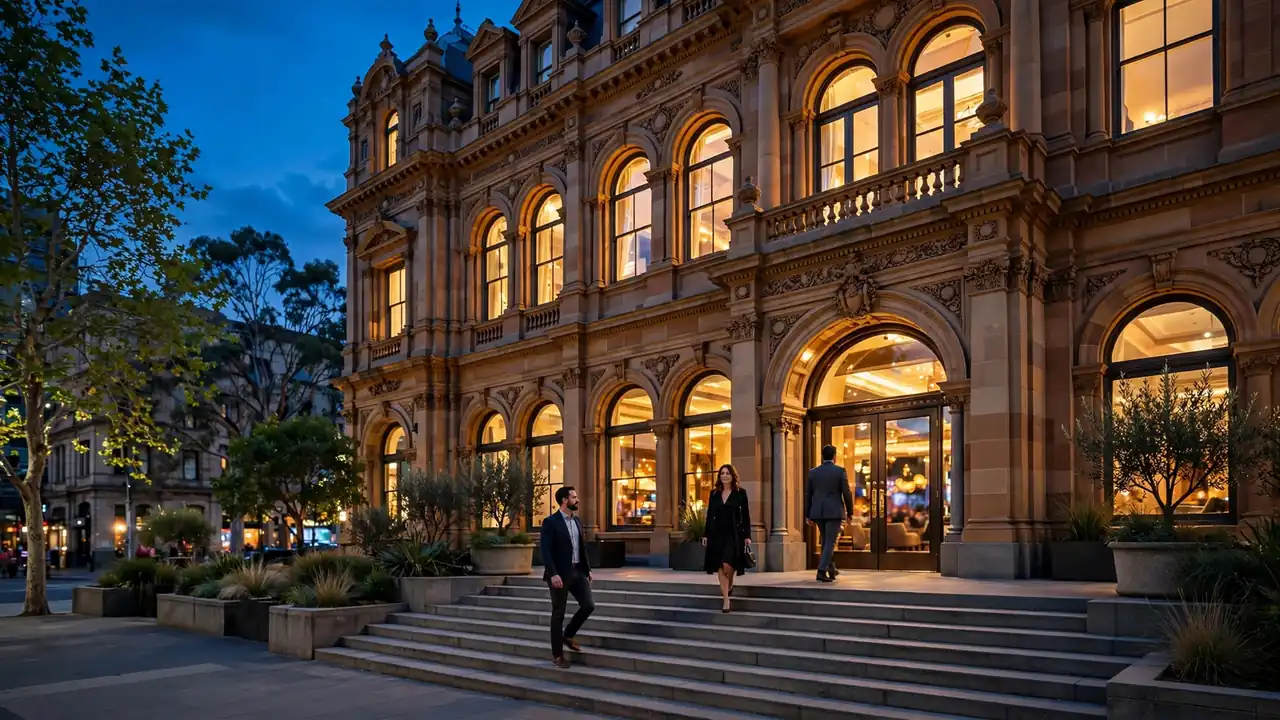
A casino hotel is a hotel first: its rooms, booking terms and facilities determine what a stay costs and what it includes. The phrase “Victoria casino hotel” does not, by itself, identify a room category, a rate or a package. Nor does the presence of a casino name in a hotel search establish that a particular accommodation offer is available.
That distinction matters when comparing hotel deals. A headline price without dates, room details and conditions is not a final price. A package label may also leave out the terms that determine what is actually included. Without those particulars, there is no sound basis for comparing one supposed offer with another or calculating the cost of a stay.
Room searches raise the same issue. A useful room description would specify the accommodation being sold and the conditions attached to the booking. Names such as standard, deluxe or suite are not interchangeable, and a room label alone would not settle matters such as occupancy, inclusions or cancellation terms. None of those details should be inferred from the general phrase “casino hotel”.
Choosing an online casino for play in Victoria calls for a close look at the information available about each operator. This list offers a concise reference to their stated licensing and, where provided, payment details.
LevelUp Casino
LevelUp Casino lists a Curaçao eGaming licence, OGL/2023/174/0082, held by Dama N.V. Its minimum deposit is A$15.
Vegaz Casino
Vegaz Casino lists a Curaçao licence, OGL/2024/1335/0780. Its minimum deposit is EUR 20.
GoldenCrown
GoldenCrown lists a Curaçao Gaming Control Board licence, OGL/2023/176/0095, held by Hollycorn N.V.
Golden Pokies
Golden Pokies lists Curaçao licensing.
SpinsUp
SpinsUp lists a Curaçao Gaming Control Board licence, OGL/2023/174/0082, held by Dama N.V.
SkyCrown
SkyCrown lists a Tobique Gaming Commission licence. Its stated payout times are around 10–15 minutes for crypto and 1–5 days for fiat; the minimum deposit is A$30.
Roby Casino
Roby Casino lists a Curaçao eGaming licence held by Roby Games Ltd.
MrPacho
MrPacho lists crypto payout times of 30–120 minutes and fiat payout times of 24–72 hours. Its minimum deposit is A$30.
Neospin
Neospin lists a Curaçao Gaming Control Board licence, OGL/2023/176/0095, held by Hollycorn N.V.
Bizzo Casino
Bizzo Casino lists a Curaçao Gaming Control Board licence held by TechSolutions Group N.V.
The same care applies to facilities. A hotel’s name or association with a casino does not establish what is inside the hotel, which services are provided, or whether any facility is available to guests. Hotel amenities need to be attached to a specific property and stated as part of its current offering. Otherwise, they are assumptions dressed as booking information.
The distinction between a hotel and a casino is also practical. Crown Casino is a named operator in Victoria, but that fact alone does not establish the room inventory, rates, packages or hotel facilities associated with any property. A casino’s existence is not a hotel listing, and it does not fill in the terms of an accommodation booking. The two products may appear together in a search, but their details cannot be treated as one set of confirmed conditions.
A hotel deal is especially sensitive to time. Availability and pricing depend on the dates and terms attached to the offer; a figure detached from those conditions cannot support a meaningful cost comparison. The same applies to claims about special packages. Unless an offer states what it includes and the conditions under which it can be booked, the word “deal” describes a label, not a saving.
Hotel-related searches can therefore be separated into distinct questions: whether a specific property is being identified, what room is offered, what the final booking terms are, and which facilities belong to the hotel itself. Each requires property-level information. A casino connection cannot substitute for it, and a generic hotel description cannot establish a current rate.
Those claims would require specific, current hotel terms rather than an inference from the words “casino” and “hotel”. For a cost decision, the relevant unit is the actual room and its booking conditions—not the search label attached to it.
A poker room, a poker tournament and a bank of poker machines are different things. The distinction matters when assessing what is known about Crown Casino in Melbourne: a specialist review reports that it has more than 3,500 poker machines. That figure describes machines, not poker tables, a dedicated poker room or tournament capacity. It also comes from a single review, so it should not be treated as a current inventory or a permanent operating figure.
The number cannot establish what poker is available to play. It says nothing about whether cash games run, whether tournaments are scheduled, how often an event might take place, or whether entry is open to the public. Those details require current venue information; they cannot be calculated from the machine count. Treating one figure as proof of a broader poker offering would turn a narrow fact into an unsupported promise.
A specialist review reports that Crown Casino in Melbourne has more than 3,500 poker machines, but this figure does not establish the availability of poker tables, tournaments, or a dedicated poker room.
The same limit applies to searches for casino rooms. The phrase can refer to a dedicated gaming room, a private area, or simply the casino floor. None of those interpretations is confirmed by the poker-machine figure. Nor does that figure establish a gym, sports bar or other facility. These are separate amenities, and evidence for one would not establish the rest.
A tournament listing would need to specify the event and its terms, including the date, format, entry conditions and availability. No such particulars are established here. The absence of those details does not prove that poker events never occur; it means that no event can be represented as confirmed or scheduled. A tournament search should therefore not be read as a tournament announcement.
“Open now” and “open today” are also time-sensitive questions, not properties that can be answered by a machine count. Current operating hours can change, and a general statement about the venue would not verify a particular day or time. Without a confirmed schedule, no opening status should be inferred.
The minimum gambling age in Victoria is 18, whether play is online or in person. That eligibility rule does not confirm that a particular poker room, table or event is available, and it does not substitute for event-specific conditions. Age and access are separate checks.
For a practical assessment, the evidence supports one narrow statement: a specialist review has reported more than 3,500 poker machines at Crown Casino. It does not establish poker tables, a dedicated poker room, tournaments, a gym, or current opening hours. Those distinctions keep a reported machine count from doing work it cannot do.
Breakfast, buffet service, resort packages and rewards are separate parts of a venue’s commercial offer. A phrase that combines them does not establish that they are sold together, or that any particular inclusion applies. The useful distinction is between a service, a room or stay arrangement, and a benefit attached to membership or a promotion.
“Buffet breakfast” describes a meal format, not a complete price. To compare an offer on that basis, the terms would need to identify whether breakfast is included or charged separately, which guests it covers, and whether the price is tied to a room booking or another purchase. Without those conditions, “breakfast included” cannot be treated as a fixed saving: the underlying price and the service being compared remain unknown. A buffet label alone also says nothing about the menu, service times or whether the offer is available on a particular date.
The same accounting applies to a casino resort. “Resort” may be used as a broad description, but it does not specify a package. A resort offer would need to state its inclusions and exclusions, the conditions for receiving them, and the period in which they apply. A headline benefit has no calculable value until those terms are stated. A room, a meal and access to another facility should not be assumed to form one bundle merely because they appear under a resort heading.
Rewards require a different comparison. The word can refer to a membership programme, a promotional benefit or a credit applied under stated rules. Those arrangements are not interchangeable. A proper valuation depends on how a benefit is earned, what it can be used for, whether it expires, and whether restrictions affect redemption. Without those terms, a rewards label does not establish a cash equivalent or a reduction in the total cost of a stay or meal.
These distinctions matter because the advertised value of a package is not necessarily its net value. The calculation is the cost of the required purchase, less benefits that can actually be used under the stated conditions. If a benefit cannot be used, or applies only to a purchase that would not otherwise be made, its practical value may be nil. A large-sounding package title does not change that arithmetic.
Breakfast searches and buffet searches therefore describe a narrower service than resort searches. A breakfast offer might be sold independently, attached to a stay, or included as one element of a package; those are different price structures. Rewards may then sit outside the package altogether. Any comparison that combines them without separating the terms risks counting the same benefit twice or treating an unavailable inclusion as a saving.
The reliable basis for evaluating such wording is a published offer with a stated price, inclusions, eligibility conditions and applicable dates. Until those elements are specified, “buffet breakfast,” “resort offer” and “rewards” remain labels rather than amounts that can be entered into a cost comparison.
Parking is a separate operating cost from casino entry or gambling. The terms “free parking” and “valet parking” describe different arrangements: the first concerns whether a parking charge applies, while the second describes a service in which staff handle the vehicle. Neither term, by itself, establishes the price, eligibility conditions, availability or access arrangements at a particular venue. Those details belong to the current venue terms, not to a general description of casinos in Victoria.
The distinction matters when comparing the total cost of a visit. A parking charge, if applicable, would sit alongside travel and other on-site spending; a valet service would describe vehicle handling, not necessarily a free or paid parking outcome. Treating either phrase as a guaranteed benefit would turn a search label into a financial assumption. The same calculation applies whether the intended visit includes dining or another activity: those plans do not determine the parking terms.
The online-casino question has a different answer because it is governed by federal law. The Interactive Gambling Act 2001 prohibits operators from providing online casino-style games to customers in Australia. That category includes slots, roulette, blackjack and online poker. The restriction concerns the provision of the service to people in Australia; it is not a distinction between a Victorian website and a website hosted elsewhere.
Legal Prohibition
The Interactive Gambling Act 2001 prohibits operators from providing online casino-style games, such as slots and roulette, to customers in Australia.
Victoria has no locally licensed online casino offering slots, roulette or blackjack. A website presenting itself as an online casino for Victorian residents does not become lawful simply because it can be reached online or describes itself as licensed in another jurisdiction. The domestic licensing position and the federal prohibition are separate points, but both lead to the same practical boundary for casino-style games offered online in Australia.
Enforcement of the federal Act sits with the Australian Communications and Media Authority, commonly shortened to ACMA. Its role is to enforce the law governing interactive gambling services, rather than to certify a list of Victorian online casinos. That distinction is material: a regulator’s enforcement function is not evidence that a locally licensed online casino market exists.
This legal position applies to online casino games, not to the physical casino experience. A search for a casino in Victoria may concern a land-based venue, while an online casino search points to a service category subject to the federal ban. The shared word “casino” does not make those two activities legally interchangeable. Nor does an online casino’s reference to bingo, dining or other features change the status of prohibited casino-style games offered to Australian customers.
The financial comparison is therefore straightforward. Parking terms concern the cost and handling of a physical visit; online casino legality concerns whether an operator may provide casino-style games to customers in Australia. The former must be assessed from the venue’s own current conditions. The latter is set by the Interactive Gambling Act 2001, with ACMA responsible for enforcement.
Accommodation near a casino is a different question from whether the casino itself has a hotel. A nearby stay could involve an independent property, but proximity alone does not establish a connection, a joint offer or a booking arrangement.
That distinction matters when comparing costs. A room advertised as close to a venue may still require separate transport, and a package described as a casino deal would need clear terms showing what is included and who provides each part. Without those details, a headline price cannot be treated as the total cost of a stay. The label “nearby” is not a distance measure.
Location is the first practical variable. A property’s address is needed to assess how far it is from the casino and whether the route is useful for the intended visit. A name or broad area alone does not establish walking distance, public transport access or travel time. Those details should not be inferred from a casino reference in a property listing.
Price comparisons also depend on the booking conditions. Dates, room occupancy, taxes or other charges, cancellation terms and payment conditions can change the amount payable. A low displayed rate is not a meaningful comparison if the dates differ or important charges are left out. The same applies to packages: the word “deal” does not specify whether accommodation alone is included or whether other services form part of the offer.
The phrase “Victoria Casino accommodation” can therefore refer to two separate things: rooms operated by the casino, or independent places to stay in the surrounding area. Neither interpretation establishes a particular option or price. Hotel rooms and hotel facilities belong to the property itself; nearby accommodation requires its own address, operator and booking terms. Treating these as interchangeable can make a search result look more definite than the underlying arrangement.
A sound comparison would require the accommodation provider to identify the property, give its location and set out the booking terms for the relevant dates. Any claimed casino package would also need to state the participating parties and precisely what the package covers. Without those particulars, there is no reliable basis for naming a nearby property as a recommendation or presenting a promotion as available.
The result is a narrow but useful boundary: the existence of a casino does not, by itself, establish nearby rooms, a preferred hotel, a discounted rate or a bundled stay. Those are separate commercial claims, each requiring specific details before a total cost can be calculated. A proximity label is a starting point for checking location, not evidence of a booking benefit.
Contact details, bar facilities and table games are separate practical questions, even when they are grouped under a casino’s name. A phone number or map pin can help identify a venue, but neither confirms what is available inside. The same distinction applies to searches for baccarat, craps, concerts and a casino bar: the terms describe things people may want to locate, not confirmed services or schedules.
Crown Casino is associated with a reported figure of more than 3,500 poker machines, attributed to a specialist review. That figure concerns machines only; it does not establish the presence of baccarat or craps tables, a particular games schedule, or the layout of any gaming area. It is also not a measure of bars, entertainment or other facilities. A venue’s scale cannot be used as a substitute for a current floor plan.
A request for a casino contact number has a narrower purpose: reaching the operator about matters such as entry, access or a specific facility. A map serves a different one, locating an entrance or orienting visitors around a site. Those details can change, so an old listing or an unattributed map marker is not a sound basis for a visit. No address, phone number, email channel, opening time or map location should be inferred from the venue name alone.
Bar searches need the same separation from restaurant information. A bar is a non-restaurant facility, and its existence, location, service hours and offerings require direct confirmation. A concert search likewise concerns scheduled entertainment, not simply the presence of a casino. There is no basis to treat a search result, past event listing or general venue description as proof of a current concert programme. Event dates and access conditions are operational details, not permanent features.
For baccarat and craps, the useful distinction is between a game being known by name and its being offered at a particular venue. The reported poker-machine count says nothing about either table game. It does not confirm table availability, operating hours, minimum stakes or rules. Those commercial terms should not be supplied by analogy with another casino or inferred from a broad description of Crown Casino.
In Victoria, live casinos are regulated by the Victorian Commission for Gambling and Liquor Regulation, and the minimum gambling age is 18. Those points establish the regulatory setting, not the practical details of a particular bar, game, concert or entrance. Contact information and venue plans are useful only when they are current and attributable to the operator; without that distinction, a precise-looking number or pin can still lead to the wrong conclusion.
Opening status, reopening announcements, entertainment programmes and event listings are time-sensitive. A review can describe an experience at a particular point, but it does not establish today’s hours or confirm that an event is still scheduled. The useful details in any listing are its date, the venue named and whether the information concerns regular operations or a one-off occasion. Without those distinctions, “open” and “reopening” can describe different things.
A reopening announcement should be read as a dated operational update, not as a standing schedule. It may refer to a particular area or service rather than the whole venue. Likewise, an event announcement establishes a planned programme only for the stated date; it does not establish a continuing entertainment calendar. These are separate questions, and one answer cannot safely be carried across to the other.
Development claims need the same separation between stages. A proposal, a planning process, construction work and a completed project are not interchangeable. The word “development” alone does not establish that work has been approved, started or finished, or that operations have changed. For a review of Crown Casino, the relevant test is whether the statement identifies the project and the stage it has reached. Without that, it is not a reliable basis for describing current conditions.
Employment information is also tied to a date and a specific role. A past vacancy or general careers page does not establish that a position is currently available. A useful listing identifies the employer, job title, location and application status; those details determine whether it is actionable rather than merely descriptive. No employment outcome follows simply from the existence of a casino.
There is a stable regulatory context, but it does not supply an events calendar or operating timetable. Victoria’s live casinos are overseen by the Victorian Commission for Gambling and Liquor Regulation, while the same regulator also has responsibility for horse racing in the state. That identifies the relevant public authority; it should not be mistaken for confirmation of an opening time, scheduled performance, development milestone or job vacancy.
Menu references are another kind of dated information. A menu can change, and a mention of one does not establish current service hours or an event programme. Those subjects should be assessed independently rather than folded into a broad review.
For a Victoria casino review, the sound distinction is between a dated, specific announcement and a general claim about what is happening now. Opening status, events, employment and development each require their own current detail. A venue’s name or an old listing cannot do that work on its own.
A search for a casino spa can combine two separate expectations: a casino venue and a wellness facility. The wording does not establish that the venue has a spa, treatment rooms or booking arrangements. Those are distinct facilities, not features that can be inferred from the casino label. The same applies to a day-spa visit: it should not be treated as an available service unless the venue itself identifies it.
Address searches are more straightforward in purpose, but a venue name alone is not a usable street address. “Victoria casino” may refer to the state or form part of a venue name, so the wording can leave the intended location unclear. Crown Casino and Crown Melbourne are names associated with the Victorian casino context; neither name, on its own, supplies a street address. A location should be taken from the operator’s current venue information rather than reconstructed from a search phrase.
Dress-code searches call for a similarly narrow distinction. A casino’s name does not reveal whether clothing rules apply, what those rules cover or whether requirements differ between areas. No particular standard should be assumed for entry, bars or other spaces on the strength of the venue name alone. Where a dress policy matters, the relevant terms are those published by the venue for the specific visit.
Bar-related searches also need precise wording. A search mentioning casino bars expresses interest in drinks or bar facilities; it does not identify a particular bar, its location, service or entry conditions. Those details should not be supplied as though they were established characteristics of every casino in Victoria.
These distinctions matter because a facility, an address and a policy are separate pieces of information. A spa listing would establish a wellness service; a venue location would identify where the casino is; a dress code would set conditions for entry. One does not follow automatically from another. Likewise, a broad venue search cannot settle details that depend on the operator’s own current information.
For Crown Casino or Crown Melbourne, the name can identify the subject of a search, but it is not a substitute for a current address or a specific statement about spa services, bars or clothing rules. Keeping those categories separate avoids turning a plausible assumption into a practical detail.
Restaurant searches linked with Victoria’s casino point to a practical question: what dining is actually available at the venue? The name alone does not settle that question. A casino in Victoria, Australia, may be associated with a large entertainment complex, but that association is not a reliable substitute for current details about restaurant names, cuisine, menus, prices or service hours.
The same distinction applies to searches for restaurants at or inside a casino. A search phrase can describe an intended location without confirming which operator or venue it means. “Victoria casino” may refer to the state, while a particular property may use a separate name. That matters before comparing dining options: details for one venue cannot safely be assigned to another simply because both are connected with casino activity.
A usable restaurant comparison depends on terms that can be checked. Menu prices determine the likely bill; opening hours determine whether a venue fits the timing; and booking conditions can affect whether a table is available. Without those details, claims about value, choice or convenience are not calculations. They are decoration.
The phrase “near the casino” also changes the subject. A restaurant in a casino and an independent restaurant nearby are different propositions, with separate locations and trading arrangements. Proximity alone does not establish that a venue is part of the casino, that it serves casino guests, or that its hours align with a visit. Those distinctions should be resolved before treating nearby dining as an on-site option.
A rooftop bar is another separate category, not a restaurant detail. The wording may signal interest in a view, drinks or a particular setting, but it does not establish that a rooftop venue exists at the casino or that food is served there. A bar should not be counted as a restaurant unless its dining offer is clear.
The relevant standard is straightforward: a restaurant claim needs a named venue and current operating information. Menus and prices can change, and opening hours can vary, so dated listings should not be treated as permanent terms. Until those particulars are established for the specific property, the casino’s restaurant offer cannot be compared on cost, menu or availability.
For the broad question of restaurants at a casino in Victoria, the responsible answer is therefore limited: the search wording does not itself identify a confirmed dining venue. It supplies a location idea, not the details needed to decide where to eat or what the meal will cost.
Food at a casino can mean several different things: a quick-service counter, a food court, a café or a full-service venue. Those formats have different menus, prices and operating arrangements, so the word “food” alone does not describe a single offer. A food court, in particular, implies multiple vendors sharing a dining area; it should not be treated as another name for a restaurant.
The same distinction applies to leisure facilities. A pool is a separate amenity, not an automatic part of a casino or hotel stay. Its availability, access conditions and opening times would need to be confirmed directly before they could be included in a practical comparison. Without those terms, a pool-related assumption has no usable value.
For Crown Casino, a specialist review has reported more than 3,500 poker machines. That figure concerns gaming equipment only. It does not establish that the venue has a food court, any particular food outlet or a swimming pool. Keeping those categories separate prevents a gaming statistic from being mistaken for a broader description of the property.
The useful distinction is therefore between a facility’s name and the conditions attached to it. For food service, those conditions include what is served, where it is served and when it operates. For a pool, they include whether it is on site and who may use it. Until such details are confirmed, neither a food-court label nor a pool listing can support a reliable estimate of convenience or cost. A venue name is not a facilities schedule, and the difference matters when comparing what a stay actually includes.
Online casino-style games cannot legally be offered to Australian customers, including Victorian residents. It is not generally a criminal offence for an individual to access an offshore casino, but those sites are outside Victoria’s gambling regulatory system.
You must be at least 18 to gamble in Victoria, whether online or in person.
Offshore gambling sites are not licensed or regulated under Victoria’s gambling system, so players may have fewer protections in payment, account and complaint disputes.
Yes. Victoria regulates land-based casinos and licensed online betting and wagering; the Victorian Commission for Gambling and Liquor Regulation oversees gambling in the state, while the federal ACMA enforces the Interactive Gambling Act.
Using an offshore casino is not generally a criminal offence for an individual, but online casino-style games cannot legally be offered to Australian customers, whether or not the site accepts cryptocurrency.
Online sports betting and wagering on horse, harness and greyhound racing are allowed when supplied by operators licensed in Australia. Online casino games such as slots, roulette and blackjack cannot legally be offered to Australian players.