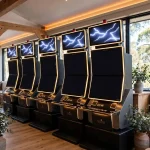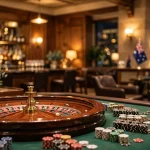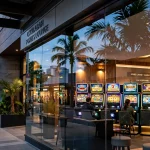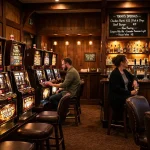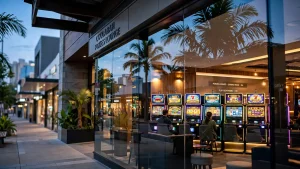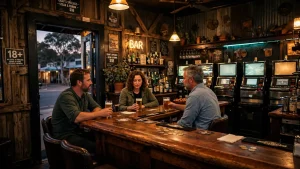
Venue listings, gaming-machine hours, legal context and search results each have limits when assessing access in Geelong.
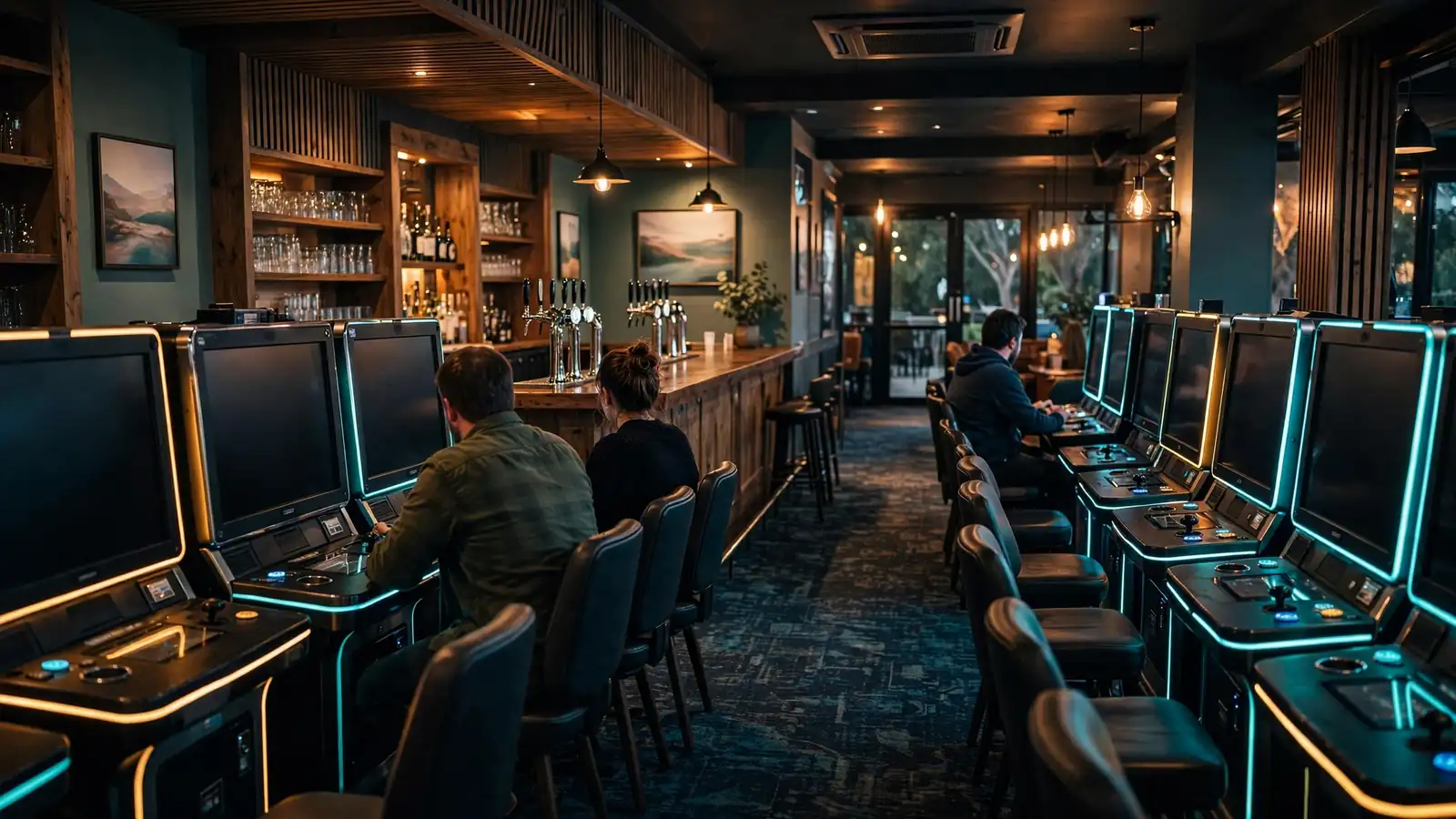
“Open now” describes a venue’s stated operating status at a particular moment. It does not, by itself, establish that its pokies are available to play. Those are separate conditions: a venue may be open for some purpose while access to a particular area or service differs. Treating the two as interchangeable turns a narrow status label into a claim it cannot support.
A listing can answer a limited question: whether the venue is shown as open. It is not a live inventory of every facility inside. The label does not specify which areas are accessible, whether gaming machines are operating, or whether a disruption has affected them. Nor does it provide a reliable account of what is happening at the machines at the time someone checks.
That distinction matters when a search is for pokies open in Geelong, especially when the wording includes “now.” A result may appear current while relying on hours entered earlier or on information that has not been updated to reflect a change. Even a venue’s own published opening information is not the same as confirmation of live machine availability. A sign or listing can describe a schedule; it cannot, without more, certify the present status of each facility.
Choosing online pokies for a Geelong-focused search means checking the details that are actually available before deciding whether a site suits you. This list gives a brief, factual snapshot of each option.
LevelUp Casino
LevelUp Casino lists a Curaçao eGaming licence, OGL/2023/174/0082, under Dama N.V. Its minimum deposit is A$15.
Vegaz Casino
Vegaz Casino lists Curaçao licence OGL/2024/1335/0780. Its stated minimum deposit is EUR 20.
GoldenCrown
GoldenCrown lists Curaçao Gaming Control Board licence OGL/2023/176/0095, held by Hollycorn N.V. The available details are limited to its licensing information.
Golden Pokies
Golden Pokies is listed with a Curaçao licence. No further operator details are provided.
SpinsUp
SpinsUp lists Curaçao Gaming Control Board licence OGL/2023/174/0082, under Dama N.V. The available details are limited to its licensing information.
SkyCrown
SkyCrown lists a Tobique Gaming Commission licence and a minimum deposit of A$30. Its stated payout times are around 10–15 minutes for crypto and 1–5 days for fiat.
Roby Casino
Roby Casino lists a Curaçao eGaming licence, with Roby Games Ltd named in the licensing details. No further operator details are provided.
MrPacho
MrPacho lists a minimum deposit of A$30. Its stated payout times are 30–120 minutes for crypto and 24–72 hours for fiat.
Neospin
Neospin lists Curaçao Gaming Control Board licence OGL/2023/176/0095, held by Hollycorn N.V. The available details are limited to its licensing information.
Bizzo Casino
Bizzo Casino lists a Curaçao Gaming Control Board licence, with TechSolutions Group N.V. named in the licensing details. No further operator details are provided.
There are therefore two different checks, not one. The first concerns the venue: is it open according to its stated hours? The second concerns the gaming area: are the machines operating and accessible at that time? A positive answer to the first does not settle the second. If access to pokies is the deciding detail, the relevant confirmation needs to concern gaming operations specifically, rather than the general open-or-closed label.
The reverse distinction is also important. A venue’s stated opening time does not establish that its pokies begin operating at that same time. The word “open” can refer to the venue as a whole, while particular services may be subject to separate operating conditions. A search result that shows an early opening time should not be converted into a claim that machines are available from that time. The same applies to late opening hours: a venue remaining open later does not establish that every facility remains in operation for the full period.
This is why searches for early or late access need more than a single status badge. The useful question is not simply whether a venue is open, but what the opening information actually covers and whether the gaming area’s status has been confirmed. Without that distinction, a person can arrive based on a correct venue-hours listing and still find that the service they intended to use is unavailable. The listing may be accurate in its own narrow sense; the conclusion drawn from it may not be.
The phrase “open now” also has a time boundary. It refers to the moment represented by the information, not to a promise that conditions will remain unchanged. A venue can change its operating status, and an online listing may not reflect that change immediately. A screenshot or saved result is even less useful for establishing later availability. For a time-sensitive decision, the age and scope of the status information matter as much as the word “open.”
Search wording can blur several separate questions: whether a Geelong venue is open, whether its gaming area is accessible, whether the machines are operating, and whether a particular machine is available. A general result may address only the first. It should not be read as confirmation of the others. “Pokies open now” is a practical shorthand, not a precise operating report.
Opening status also says nothing about a machine’s payout percentage. That is a separate characteristic and cannot be inferred from a venue being open, from the time shown, or from the presence of machines. Availability is a question of access and operation; return information concerns the game’s terms and behaviour. Combining the two produces no sound comparison. The label “open” carries no information about the likely result of a session.
For a Geelong visit, the defensible interpretation is narrow: an open-now indicator can signal that a venue is listed as open, but it is not proof that pokies are operating at that moment. Any stronger conclusion requires confirmation that specifically covers the gaming area and the relevant time. In the absence of that confirmation, venue status and machine status remain distinct facts.
Attention: An "open now" indicator signals that a venue is listed as open, but it is not proof that pokies are operating at that moment.
A return-to-player figure describes a game’s theoretical return across play, not the result of a particular visit. It can help compare stated settings, but it cannot forecast what happens during one session. A figure that looks higher is not a promise of a larger payout, a winning session or even a return within a particular period.
There is also a qualification when comparing the same pokie at different venues. A specialist review reports that some game providers allow casinos to choose among multiple RTP settings for a game. On that account, the title alone may not establish which return percentage applies at a particular casino. A figure attached to a game in one context should not automatically be treated as the setting in use elsewhere.
That distinction matters when assessing claims about the best-paying pokies in Geelong. A comparison needs to identify the relevant game and the applicable setting, rather than relying on a familiar title or a general figure found elsewhere. If the setting cannot be tied to the game in the place being considered, the comparison is incomplete. A percentage without that context is a label, not a reliable basis for estimating an individual outcome.
Even where the applicable return setting is clear, it describes a theoretical pattern rather than a schedule of results. It does not say that a machine will return a particular amount during a visit, nor that any player will receive a defined share of their stakes. The result of a session can fall well above or below the theoretical figure. That is not a contradiction: a long-run measure and an individual outcome answer different questions.
The reason is the way each spin works. A Random Number Generator determines the result, and one spin does not depend on the result of the spin before it. A run of losses does not make a win due, while a recent win does not establish that another is imminent. Treating a machine as if it were “ready” to pay converts independent outcomes into a pattern that the stated mechanics do not support.
This also limits comparisons based on short observations. A brief session at one machine cannot establish its return setting or show how it performs against another. The outcome may reflect ordinary variation in random results rather than a meaningful difference between machines. Nor does a winning result at one location prove that the same pokie, if offered elsewhere, has an identical setting.
For people comparing pokies around Geelong, including the CBD, the useful distinction is between information about a game’s setting and assumptions drawn from a title, location or recent result. A venue name does not itself establish an RTP figure. A game’s presence does not show which available setting has been selected. And a short run of results does not reveal the underlying configuration. Those are separate claims and require separate evidence.
A disciplined comparison therefore asks what the stated percentage refers to and whether it is specific to the setting in question. If the information only names a game, it does not settle the setting. If it reports a return figure without identifying where that figure applies, it does not establish the percentage in use at a particular venue. If it describes recent payouts, it does not convert those outcomes into a prediction.
The same limits apply to broad claims about the best pokies in Geelong. “Best” can imply that one machine offers a better individual prospect, but a return percentage cannot support that conclusion on its own. It describes a theoretical measure, while each play remains random. Without a confirmed setting tied to the relevant game and venue, even a seemingly precise comparison may be comparing unlike information.
RTP is therefore a comparison tool with a narrow job: it can distinguish stated theoretical settings when those settings are known and comparable. It cannot identify a guaranteed winner, forecast a session or show that a particular machine is due to pay. For practical comparison, the setting and the independence of each result both matter; ignoring either turns a technical figure into a promise it was never designed to make.
A Geelong location does not change the legal status of online pokies. Under the Interactive Gambling Act 2001, companies must not provide real-money online casino games, including pokies, to people in Australia. No Australian licence has been issued for online casinos, so there is no Australian-licensed online casino offering these games.
The legal distinction is between the operator and the individual. The Act targets companies that provide prohibited services; it does not impose a penalty on an Australian player simply for using an offshore site. That distinction is narrow. It does not make the offshore operator lawful in Australia, give the service domestic approval, or provide the player with Australian consumer protection if a dispute arises.
This matters when terms such as “online pokies near Geelong” or “Geelong casino online pokies” are treated as though they describe a local venue. An online service does not become a Geelong venue because it is available on a phone in Geelong. Nor does a local place name establish that a site is licensed in Australia. The same applies to searches for real-money play or a no-deposit offer: the wording of an offer cannot change the legal status of the operator.
The absence of Australian licensing also means there is no domestic online-casino licence against which an operator’s conduct can be checked. The Australian Communications and Media Authority (ACMA) enforces the Interactive Gambling Act and blocks access to illegal offshore gambling sites; internet service providers must comply with its blocklist. Blocking does not turn an offshore service into an Australian-regulated one, and a site’s appearance online is not evidence of domestic authorisation.
The financial risk is clearest when winnings are withheld. If an offshore casino refuses to pay, Australian players have no legal recourse in Australia to compel payment. A claim may be subject to the operator’s terms and the laws of the jurisdiction where it is based, rather than a domestic process capable of securing the money. An advertised jackpot, a “best paying” label or a promised bonus does not resolve that enforcement problem. A balance displayed on a screen is not the same as a recoverable debt.
Legal Risk
There are no Australian-licensed online casinos; using offshore sites means players have no legal recourse in Australia if winnings are withheld.
Searches for high-limit play or maximum bets raise the same legal question before any comparison of terms: who is providing the service, and under what authority? The size of a permitted stake does not establish that the operator is licensed locally. Likewise, a no-deposit promotion does not create an Australian licence or guarantee that a resulting balance can be withdrawn. Promotional language describes an offer; it does not supply regulatory protection.
For people searching for pokies in Geelong, the essential distinction is therefore between physical gaming venues and remote online services. This section concerns the latter. There is no Australian-licensed online casino, and offshore real-money casino services are prohibited for operators serving people in Australia. The fact that the law does not penalise the individual player is not equivalent to a safe or locally enforceable arrangement. If an offshore operator withholds winnings, Australian legal remedies are not available to make it pay.
Airport-to-venue planning depends on two separate locations: the airport being used and the exact venue address. A search for pokies near Geelong Airport does not, by itself, identify a gaming venue at the airport or establish which venues are close to it. Nor does a result that includes “Geelong” confirm that the venue is within a practical distance of an airport.
The same distinction applies to searches for pokies in Geelong or near Geelong. A broad place-name match is not a route, a travel time or proof that a venue has gaming machines. “Near” has no fixed meaning without a starting point and a destination. The distance from an airport to one venue may differ substantially from the distance to another, so a general Geelong result cannot settle the transport question.
Before setting out, the useful details are the airport’s precise name, the venue’s street address and the intended arrival point at the venue. Those details allow a map or transport service to calculate a route for the relevant time. Without them, any claim about the quickest option, distance or journey duration would be guesswork. That is not a minor accounting difference: a route estimate without endpoints has no usable denominator.
A venue listing should also be checked against the venue’s own current information. A map pin can help locate an address, but it does not establish that the venue offers pokies, that the listing is current or that a particular facility is available. These are separate questions, and combining them into one “near the airport” result can create a misleading impression of certainty.
Searches mentioning North Geelong raise the same practical issue. The suburb name can narrow a location search, but it does not identify a particular venue or show how that venue connects to an airport journey. A route should be assessed from the actual airport to the actual address, rather than inferred from a suburb label.
Airport wording can also be read in two ways: a request for venues close to an airport, or a question about whether pokies are inside the airport itself. Those are not interchangeable. A location phrase alone does not establish that gaming machines are present on airport premises. Confirmation would require specific venue information, not an assumption drawn from the wording.
For a reliable plan, the destination needs to be an identified venue, not simply “pokies near Geelong.” Then the route can be checked using current transport information, with the airport and venue addresses matched to the intended travel time. Until those locations are confirmed, no defensible distance, route or nearby-venue claim can be made.
A venue’s operating standards are a separate question from whether its pokies suit a particular preference. A compliance requirement sets out what the venue must do; it does not establish a ranking, identify a particular Geelong venue, or indicate how its machines perform.
A report by regionriverina.com.au describes a requirement for venues with more than 20 gaming machines to have a dedicated responsible gambling officer (RGO) on duty while those machines are operating. The threshold matters: the reported obligation applies to venues above it, not automatically to every venue with pokies. The officer’s required presence is tied to machine operation, rather than simply to the venue being open.
The same report describes a one-month grace period for venues to remove signage and introduce responsible gambling officers. That transition period is operational, not a continuing exemption: it allows time for the stated changes to be made. The report does not establish the timing of a particular venue’s implementation, so the existence of the requirement alone cannot confirm whether a specific venue has completed the transition.
A gambling incident register is another stated part of the requirements. It is intended to record occurrences, including situations in which a patron’s behaviour indicates possible gambling harm or that harm is already affecting them. In practical terms, that makes the register a record of incidents requiring attention, rather than a promotional feature or a measure of machine quality. Its presence cannot be inferred from a venue’s size or from the number of machines listed.
For anyone comparing venues, these details are useful only as a compliance lens. The RGO requirement concerns staffing while machines are operating; the grace period concerns implementation; and the register concerns recording relevant incidents. None of those points identifies which Geelong venues meet the threshold, confirms their current staffing or records, or establishes that a venue is “best”. Treating a compliance measure as a recommendation would turn a duty into an endorsement, which is not what the duty says.
The reporting also does not supply a venue-by-venue audit. A general description of requirements cannot substitute for confirmation from an individual venue or the responsible regulator. In particular, no conclusion about a Geelong venue’s present arrangements follows solely from the reported threshold and transition period.
The useful distinction is between rules and evidence of implementation. The reported rules describe what qualifying venues are expected to put in place. A claim about a specific venue would require venue-specific evidence. That distinction keeps operational compliance separate from preference, machine performance, and any ranking of places to play.
Compliance Requirements
Venues with more than 20 gaming machines are required to have a dedicated responsible gambling officer on duty while those machines are operating.
A venue’s opening time and the hours when its gaming machines can be used are separate details. A venue may be open for food, drinks or other services while its gaming area is closed. Conversely, a stated gaming-room schedule does not establish that the entire venue is open for the same period.
That distinction matters when assessing claims of round-the-clock access in Geelong. A venue described as open late is not thereby confirmed to have machines operating throughout those hours. Nor does a general listing establish that any Geelong venue or gaming area operates continuously. A 24-hour claim needs to refer specifically to machine availability, not simply to the venue’s doors or another service.
Opening information can also become outdated. A published schedule may not reflect a temporary closure, a changed operating arrangement or an interruption to access. “Open now” and “machines operating now” are therefore different statements, and neither should be inferred from the other. A business-hours listing alone cannot settle the second question.
For a useful comparison, the relevant details are the venue’s opening hours, the gaming area’s hours and any conditions that affect access to the machines. Those details should be stated separately and tied to the venue and date they describe. Without that separation, an apparently precise opening time can leave the main point unanswered.
The operating framework also treats machine operation as distinct from general venue activity. For instance, venues with more than 20 gaming machines are required to have a dedicated Responsible gambling officer on duty while those machines are operating. That condition is about the period of machine operation; it does not establish the venue’s public opening schedule or show that machines run around the clock.
For anyone comparing Geelong pokies hours, the practical conclusion is narrow: venue hours do not prove gaming-machine hours, and a late closing time does not mean 24-hour access. A reliable statement must specify which part of the venue is open and whether the machines are operating during the stated period. Without that distinction, “open” answers only part of the question.
A Crown-related venue and a Geelong venue are separate location claims. Putting both names together does not establish that a Crown casino or Crown gaming room operates in Geelong. The distinction matters: a familiar brand name can identify the subject of an enquiry without identifying a local premises.
The same care applies when looking for pokies associated with Crown in Geelong. A venue would first need to be identified as being in the city and connected to Crown; only then could its gaming facilities be described. The wording alone does not establish either point. It cannot support a local directory entry, a machine count or a statement about what is available on site.
“Best pokies room” also leaves the comparison undefined. Best might refer to the size of a room, its facilities or the selection of machines, but those are different measures. A ranking needs identifiable venues and comparable details. Without those, a list would give an appearance of precision without a basis for comparing places.
Maximum cash payout is a separate question from venue identity. It concerns the payout conditions attached to a particular machine or arrangement, not a general feature that can be assigned to every pokie in a named area. A maximum cannot be inferred from the words “Crown”, “Geelong” or “pokies”. Nor does the phrase itself establish a cash limit or explain the conditions under which a payout would be made.
These distinctions prevent three different assumptions from being collapsed into one: that Crown is connected to a local venue, that the venue has a particular room or machine selection, and that its pokies share a stated payout maximum. Each would require its own basis. A location label is not evidence of the other details.
For a Geelong-specific description, the premises and its connection to the named brand need to be clear before claims are made about its gaming room. Any comparison of rooms or payout conditions would then need to refer to the relevant venue or machine, rather than treating a broad place-name phrase as a complete specification. Until those identifiers are clear, the Crown wording should be read as an unresolved location reference, not as confirmation of a Geelong listing.
CBD and club searches point to a different practical question from airport-based location planning: whether a particular venue is in or near the city centre, and whether it has pokies. A club name, a CBD label and a gaming facility are separate details. One does not establish the others.
“Best” also needs a defined basis. It might mean convenient location, a preferred atmosphere or a particular game, but none of those criteria can be inferred from the word alone. Without a named venue and a stated comparison measure, a ranking would be a preference presented as a finding. The label “CBD” is not precise enough to identify a premises or confirm what facilities it offers.
Club searches require the same distinction. The word may describe many kinds of venues; it does not establish that a particular Geelong club has pokies, or how many machines it operates. Venue names and gaming facilities should therefore be treated as separate claims, not joined by assumption.
Self-exclusion is a different issue from locating a club. It is one responsible-gambling option, alongside deposit limits, loss limits and session time limits. These tools concern controls on gambling, not a venue’s location or the machines it may have. A person considering self-exclusion should distinguish between a venue-based arrangement and any broader scheme, because the scope and effect depend on the arrangement involved. No city-centre label, club description or machine listing by itself explains those terms.
For a useful comparison, the relevant unit is a specific venue and a specific question: its address, whether it has gaming facilities, or what responsible-gambling arrangements apply. Combining all three into a single “best” label obscures the actual decision. A location claim cannot prove machine availability; machine availability cannot establish that a venue is suitable; and the word “club” supplies neither conclusion.
Geelong’s CBD can be used as a broad geographic reference, but it should not be treated as a venue name or a guarantee of particular facilities. A sound comparison keeps location, gaming provision and gambling controls distinct. That is less dramatic than a ranked list, but it avoids turning an ambiguous label into a claim about a real premises.
A request combining Geelong with Parkes does not identify a gaming venue on its own. Parkes may refer to a place, a venue name or another location detail, and the wording does not establish which meaning is intended. Treating it as a confirmed Geelong address would turn an unresolved place name into a misleading listing.
That distinction matters when comparing pokies in Geelong. A venue name, suburb or town needs to match the intended destination before it can support a practical decision. Without that match, a result associated with “Parkes” cannot be assumed to be in Geelong, close to Geelong, or connected with a particular club. No venue, machine count or address can be reliably attached to the phrase as it stands.
The same caution applies to requests for the best pokies in Geelong. A place-name fragment is not evidence that a venue exists there, and it provides no basis for ranking one location above another. A useful venue comparison requires an unambiguous location and reliable venue details; a blended place name supplies neither.
For someone trying to identify a specific destination, the relevant detail is the exact venue name or the intended locality. Those details distinguish a local listing from a similarly worded result elsewhere. If neither is available, Parkes should remain a separate, unresolved location reference rather than being folded into a Geelong venue list.
This is a narrow point, but it prevents a larger error: treating a search phrase as proof of geography. “Geelong pokies” describes a broad location-based interest. Adding Parkes does not establish a particular Geelong venue or make the place-name clear. Until the intended location is identified, there is no sound basis for attributing pokies to a Parkes listing in Geelong.
A cashless payment option at a venue and PayID are different things. PayID is a way to address a bank transfer: the payment can be directed using an email address, mobile number or Australian Business Number (ABN), rather than relying on account details alone. The service operates through the New Payments Platform (NPP), which is available through all major Australian banks and applies end-to-end encryption to transfers.
Those features describe bank-to-bank transfers. They do not establish that a Geelong venue’s pokies accept cashless payments, that PayID can be used at a gaming machine, or that any particular venue offers a cashless system. A transfer facility used by an online gambling site is not evidence of payment functionality on a venue floor. It also says nothing about a service’s legal status, fairness or disclosure of return settings.
The distinction matters because the payment method and the place of play are separate questions. PayID’s role as a transfer address does not turn it into a machine interface or a venue feature. Any claim about cashless pokies in Geelong would need to identify the venue and the payment arrangement it actually provides; the name of a payment network alone cannot do that.
The Newcastle wording creates a separate location problem. It combines two city names but does not identify a specific venue, establish that a Newcastle location is relevant to Geelong, or support a ranking of pokies in either place. It should not be treated as a Geelong venue listing. A useful comparison requires a confirmed location and concrete venue information, not an unresolved pairing of place names.
Accordingly, PayID can be described as a bank-transfer mechanism, but not as proof of cashless gaming at a Geelong venue. Likewise, Newcastle in a combined city phrase supplies no basis for identifying a local venue.