
A practical guide to operator minimums, payment-method limits, bonus conditions and the rules affecting access from Australia.
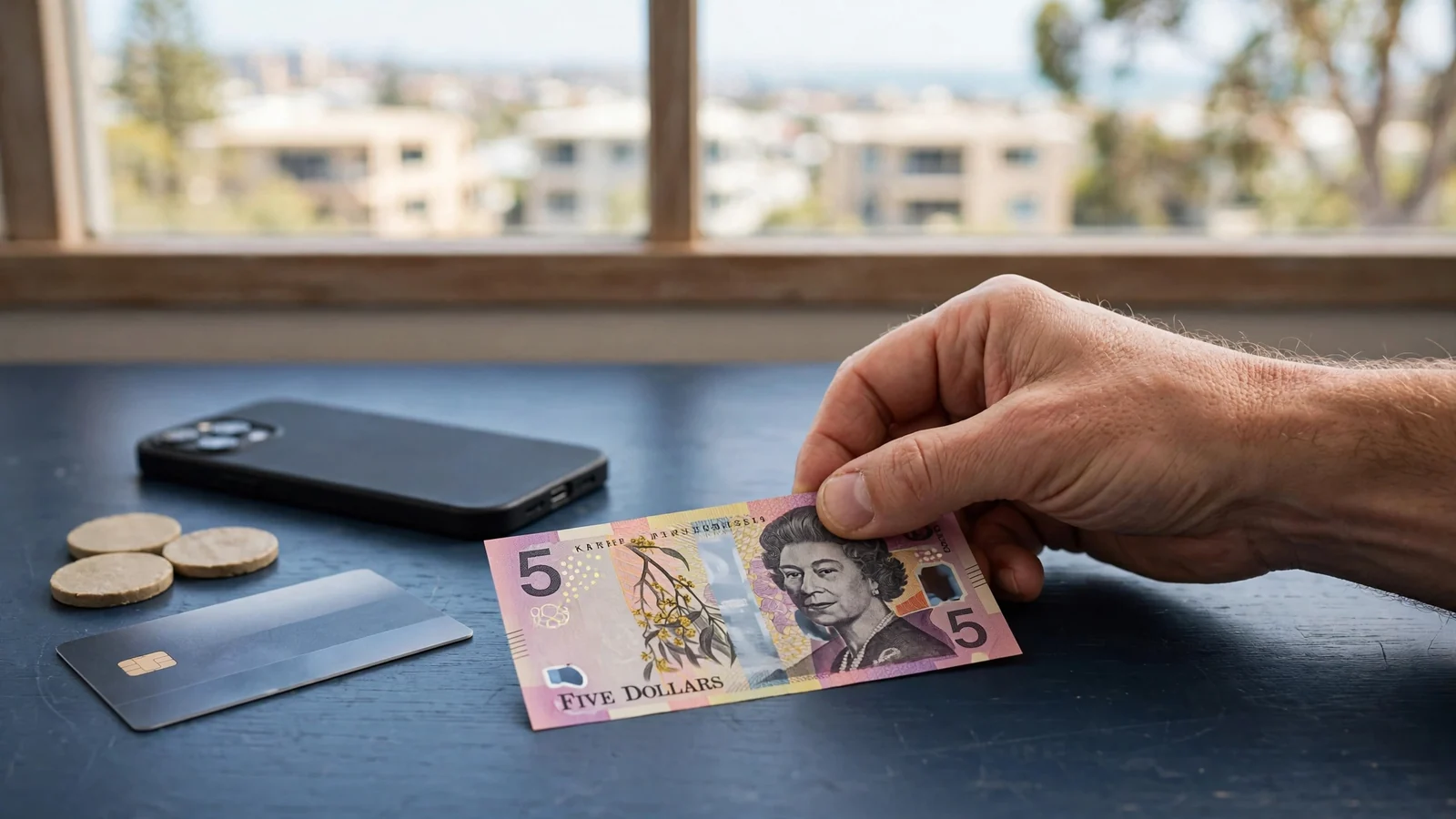
A displayed $5 minimum is a threshold stated by an operator, not proof that a $5 payment can be made. The amount that can actually be deposited depends on the payment route: a processor or method may set its own floor, even when the operator lists none. The two figures answer different questions. One describes the operator’s account rule; the other determines whether a transaction can be submitted.
That distinction matters when assessing claims about a $5 deposit at an online casino in Australia. A low figure on a payment page may refer only to the operator’s nominal minimum. It does not, by itself, establish that an available payment method will accept that amount, or that the service is lawful for people in Australia to use. Under the Interactive Gambling Act 2001, operators may not provide real-money online casino games to people physically located in Australia. A deposit claim should not be read as an endorsement or an assurance of access.
The operator’s own minimum can be absent altogether. In that case, the practical floor is still set by the method used to send the money. A payment processor can reject an amount below its threshold, or the chosen method may not support a transaction that small. The result is straightforward: a low advertised minimum is not necessarily a usable minimum.
A low advertised minimum can make a casino easier to try, but the listed deposit terms matter: check whether they actually meet the A$5 threshold before choosing. These details provide a starting point, not confirmation that every operator offers a $5 minimum deposit.
LevelUp Casino
LevelUp Casino lists a minimum deposit of A$15, so the provided figure does not meet the page’s A$5 threshold. Its listed license is Curacao eGaming OGL/2023/174/0082 (Dama N.V.).
Vegaz Casino
Vegaz Casino lists a minimum deposit of EUR 20, rather than an A$5 minimum. Its listed license is Curacao OGL/2024/1335/0780.
GoldenCrown
GoldenCrown is listed with a Curacao Gaming Control Board license, OGL/2023/176/0095 (Hollycorn N.V.). No minimum deposit is provided, so its suitability for a $5-deposit search cannot be confirmed from these details.
Golden Pokies
Golden Pokies is identified as operating under a Curacao license. No minimum deposit is provided, so the available details do not establish whether it accepts a $5 deposit.
SpinsUp
SpinsUp is listed with a Curacao Gaming Control Board license, OGL/2023/174/0082 (Dama N.V.). Its minimum deposit is not specified, so whether it fits a $5-deposit search remains unconfirmed.
SkyCrown
SkyCrown lists a minimum deposit of A$30, which is above the page’s A$5 threshold. Its listed license is the Tobique Gaming Commission, and its stated payout speeds are about 10–15 minutes for crypto and 1–5 days for fiat.
Roby Casino
Roby Casino is listed with a Curacao eGaming license (Roby Games Ltd). No minimum deposit is given, so these details alone cannot confirm whether it accepts A$5 deposits.
MrPacho
MrPacho lists a minimum deposit of A$30, above the A$5 threshold. Its stated payout speeds are 30–120 minutes for crypto and 24–72 hours for fiat.
Neospin
Neospin is listed with a Curacao Gaming Control Board license, OGL/2023/176/0095 (Hollycorn N.V.). The minimum deposit is not provided, so its fit for a $5-deposit search cannot be established from the available information.
Bizzo Casino
Bizzo Casino is listed with a Curacao Gaming Control Board license (TechSolutions Group N.V.). No minimum deposit is specified, leaving its suitability for a $5-deposit search unconfirmed.
A specialist review has reported that some offshore operators accept deposits as low as A$5 through cryptocurrency. That is a reported possibility, not a stable market-wide condition. Payment options and their thresholds can change, and the statement does not establish that every operator accepts that amount or that a particular service is available to Australians. It also does not mean the operator’s displayed figure will match the minimum imposed by the payment route.
The broader range reported by a specialist review for a usable deposit in Australia is A$10 to A$20. That range should be treated as a sourced observation rather than a universal rule. It illustrates the gap between a headline threshold and an amount a payment method will permit; it cannot settle the terms of any individual transaction. A displayed A$5 minimum and a higher payment-method floor can both be accurate at the same time.
The distinction can be stated plainly:
Only the last of these determines whether the deposit can be completed. If the operator’s rule is lower than the processor’s, the processor’s threshold controls the transaction. If the operator’s rule is higher, that higher threshold applies instead. A headline amount alone therefore does not confirm the amount that can be transferred.
The phrase “A$5 minimum deposit” can also conceal what is being described. It may refer to a figure displayed by the operator, a cryptocurrency route reported by a review, or a payment route with its own conditions. Those are not interchangeable claims. The first concerns the account terms; the second is a report about a limited payment option; the third concerns whether the payment can be made at that amount. Treating them as equivalent turns a narrow claim into a broader one than the information supports.
For anyone comparing deposit terms, the relevant figure is not merely the smallest number shown on a page. It is the amount that the operator and payment method both allow, with the legal position kept separate from the transaction mechanics. A low threshold may describe an operator’s stated rule without establishing that the funds can be sent through an available method. Conversely, a payment method’s minimum can make a nominal A$5 offer irrelevant to the transaction.
The accounting is simple, even if the wording is not: the operator’s minimum is one condition, and the payment method’s minimum is another. A deposit is possible only when the actual transaction satisfies both.
A low advertised deposit does not change the legal status of the service taking it. The Interactive Gambling Act 2001 (IGA) is the main federal law governing online gambling in Australia. It makes it unlawful for operators to provide real-money online casino games to people in Australia. The prohibition covers casino-style services such as pokies, poker, blackjack and roulette. A $5 deposit casino promoted as serving Australian customers therefore sits within a market where the service itself is prohibited, whatever amount the cashier accepts.
The legal distinction is between the operator’s conduct and an individual’s act of betting. Under the IGA, providing certain online gambling services to Australian residents is prohibited; the individual placing a bet with an offshore operator is not criminalised for that act. That difference matters, but it does not make the service lawful in Australia or remove the restrictions placed on its provider. A customer’s position and an operator’s obligations are separate questions.
Many online casinos using “Australia” in their branding operate under licences issued outside the country. Curaçao, Malta and the Isle of Man are among the jurisdictions commonly associated with those licences. Such a licence comes from the issuing jurisdiction; it is not an Australian casino licence and does not override the IGA. A brand’s Australian focus, Australian-dollar pricing or small deposit threshold does not alter that point. Offshore licensing describes the operator’s regulatory setting abroad, not permission to provide prohibited casino services to people located in Australia.
The practical consequence is that a displayed cashier or an accessible-looking website should not be read as evidence that the operator is authorised under Australian law. Nor does the presence of an offshore licence resolve the Australian legal position. The central issue is the service being provided to people in Australia, rather than whether the operator has obtained permission somewhere else. The distinction is particularly relevant to searches for a $5 minimum deposit casino in Australia: the deposit figure concerns the payment conditions, while the IGA concerns whether the real-money casino service may be provided at all.
The Australian Communications and Media Authority (ACMA) enforces the IGA and monitors compliance with federal interactive gambling rules. Its role includes enforcement action against prohibited services and the ability to ask Australian internet service providers to block websites that provide those services or advertise them in Australia. Blocking is therefore part of the enforcement framework, not simply a payment or website-access issue. The same blocking powers extend to sites advertising prohibited interactive gambling services.
ACMA reports that more than 1,455 illegal gambling and affiliate websites have been blocked since November 2019 following enforcement action. The reported number of services that have left the Australian market since enforcement began in 2017 is not consistent across accounts: one figure is more than 210, while another is more than 190. Those counts describe different reported totals, not a single agreed number. Both indicate that enforcement has been accompanied by services withdrawing from the market.
Blocking and withdrawal activity also show why availability can be unstable. A site’s branding or previous accessibility does not establish that it will remain reachable, and a blocked address is not evidence that the underlying service has become compliant. The legal framework applies to the provision of the service, not merely to a particular web address. ACMA’s enforcement can target both operators and advertising, while internet service providers may be asked to restrict access to identified websites.
Legal Prohibition
Under the Interactive Gambling Act 2001, it is unlawful for operators to provide real-money online casino games to people physically located in Australia.
For a real-money online casino, the relevant Australian framework is therefore restrictive even when the business operates from overseas. Offshore licensing may explain where an operator claims to be regulated, but it does not make the service lawful for Australian residents. The IGA places the prohibition on providers; it does not make an individual customer’s bet a criminal offence. ACMA’s monitoring, blocking requests and enforcement actions are the mechanisms through which that distinction operates in practice. A small deposit changes the amount at stake, not the legal character of the service.
A displayed minimum is an entry condition, not a measure of how much play a balance can support. A $5 minimum deposit can mean that a payment is accepted at that amount; it does not establish that the full sum will remain available after transaction costs or that it will cover a meaningful number of bets. The distinction matters most with cryptocurrency, where the casino’s stated threshold and the practical cost of moving funds are separate calculations.
A specialist review reports that some casino-set cryptocurrency minimums can be as low as the equivalent of A$1. That figure describes a nominal threshold, not a broadly established current standard. The same review notes that transaction costs and game minimum bets can make such a small transfer impractical. A deposit accepted by the cashier may therefore produce a balance that is materially less useful than its face value suggests.
The first calculation is the amount that reaches the account. If a transaction incurs a cost, that cost reduces the funds left for play; where the cost is significant relative to a small transfer, a low casino minimum offers little practical advantage. The payment screen may show the minimum the operator will accept, while the transfer itself has its own economics. Those figures should not be treated as interchangeable.
The second calculation is the size of the available bets. Games impose minimum stakes, and a balance has to be assessed against those stakes rather than against the deposit button’s lowest permitted amount. If the balance covers only a small number of minimum bets, ordinary variation in results can end the session quickly. A nominal A$5 deposit is thus not automatically a workable playing balance, even when it clears the payment threshold without difficulty.
This is why “accepted” and “usable” are different tests. The first asks whether the cashier processes the amount. The second asks what remains after payment costs and whether that balance can be used at the game’s minimum stake. A deposit can pass the first test and fail the second. The advertised minimum answers only the first unless the payment and game conditions are considered alongside it.
A deposit is considered usable only if it clears the payment threshold and provides a balance sufficient for the game's minimum stakes after costs.
A separate specialist review places the most common effective minimum for a usable Australian deposit in the A$10–A$20 range. That is a report from one review source, not a guaranteed or fixed market-wide rule. It is useful as a point of comparison, but the practical threshold for any particular transaction depends on the payment route, its costs and the minimum bets available. Treating the range as universal would be as misleading as treating a nominal cryptocurrency minimum as proof that a very small balance will be workable.
For a $5 casino deposit, the useful comparison is therefore not simply between the amount entered and the amount accepted. It is between the starting amount, the costs attached to transferring it and the amount of play that remains possible at the available stakes. A low stated minimum may be accurate while still saying very little about the practical value of the deposit.
A low entry amount says little about the cost of a promotion. The wagering requirement determines how much play must be completed before bonus-related winnings can be cashed out. A specialist review reports multipliers from 35× to 50× the bonus amount for low-deposit promotions. The calculation applies to the bonus, not automatically to the deposit: the terms need to state which balance the multiplier uses.
At 35×, a bonus of $5 represents $175 in required bets; at 50×, it represents $250. Those totals are turnover, not a target balance or a guaranteed loss. Each qualifying bet contributes according to the game’s weighting, and the amount wagered may be lost before the requirement is completed. A larger multiplier therefore creates more required turnover, but the headline amount alone does not establish the promotion’s cash value.
Game weighting can make the same multiplier substantially more demanding. Pokies commonly count at 100% toward wagering, while blackjack and roulette may count at only 10% or 20%. If a game contributes 10%, only a fraction of each bet reduces the outstanding requirement. Choosing a lower-weighted game can therefore increase the total amount that must be wagered in practice. The displayed multiplier is only one part of the calculation; eligible games and their contribution rates determine how quickly it can be met.
The maximum stake during wagering creates a separate constraint. A promotion may cap each spin at $5, and exceeding that ceiling can void winnings. A higher bet does not necessarily speed up progress safely: it may breach the terms and put the associated winnings at risk. The relevant limit is the one that applies while wagering requirements remain active, not merely the table or game’s ordinary betting range.
A maximum cashout cap can also limit the amount payable even after the wagering is complete. That cap needs to be read alongside the multiplier and game weighting, because completing the required turnover does not by itself establish that every resulting win can be cashed out. Terms can impose several independent conditions; satisfying one does not cancel another.
A useful comparison therefore records the minimum deposit required for the promotion, the multiplier and the balance to which it applies, the weighting for pokies versus table games, the maximum stake during wagering, and any maximum cashout. The minimum deposit determines the amount needed to qualify; the other conditions determine the turnover burden and the amount potentially retained. Those are different calculations, even when they appear beside one promotional figure.
Bonus Turnover Calculation
Identify the Bonus
Determine the bonus amount, for example, $5.
Apply the Multiplier
Multiply the bonus by the wagering requirement (e.g., 35x), resulting in $175 in required bets.
Account for Weighting
Adjust the turnover based on game contribution (e.g., a 10% weighting for roulette increases the total amount to be wagered).
For a small deposit, the scale of the bonus matters as much as the multiplier. A modest bonus can still carry a substantial turnover condition when multiplied, while a low-weighted game can stretch that condition further. A promotion is not made favourable by a small entry threshold if its wagering rules, stake ceiling or cashout cap materially restrict the result. The arithmetic is in the terms, not the headline.
A casino’s stated minimum deposit and a promotion’s qualifying deposit are separate conditions. A payment may be accepted at the minimum level without activating a new-player offer. Conversely, a promotion may require a larger first payment than the amount needed to open an account or add funds. A $5 deposit therefore establishes only that the payment has been accepted; it does not, by itself, establish bonus eligibility.
The promotion’s terms determine the qualifying amount and how the bonus is calculated. The threshold may apply to the first deposit, while the wagering requirement may apply to the bonus, the deposit and bonus combined, or another defined balance. Those bases produce different totals. Unless the terms state the calculation base clearly, the advertised bonus amount is not enough to estimate what must be wagered before bonus winnings can be cashed out.
A specialist review describes low-deposit promotions with wagering requirements in the 35x-to-50x range of the bonus amount. That is a reported range, not a condition attached to every offer. The multiplier has a direct cash consequence: a specialist review’s worked case of a $1,000 bonus at 35x entails $35,000 in aggregate bets before bonus winnings become eligible for withdrawal. The figure is turnover, not a required loss, but it is still the amount of wagering specified by that calculation.
Eligibility is only one part of the terms. Game weighting affects how quickly qualifying turnover accumulates: a wager may count in full on one game and only partly on another. Maximum-stake rules can also matter; exceeding a stated cap during wagering can void winnings. A maximum cashout cap may limit the amount payable even after the wagering requirement has been met. These conditions can make a promotion less useful than its headline value suggests.
The deposit threshold should therefore be read alongside the qualifying rules, not treated as a proxy for them. If the minimum deposit is below the promotion’s required first payment, a smaller deposit may be valid as a payment but excluded from the offer. If it qualifies, the bonus can still remain locked until the required turnover is completed and other conditions are satisfied. A small initial payment does not make a large wagering requirement small.
Cashout access introduces a further threshold. A specialist review reports minimum withdrawal amounts commonly falling between $20 and $50 AUD, though the applicable amount depends on the operator’s terms. A balance below that floor may not be payable yet; bonus restrictions can add another barrier. The relevant calculation is thus not simply the amount deposited, but whether the deposit qualifies, what balance the wagering multiplier applies to, how games contribute, and whether the resulting balance meets the cashout conditions.
Before any promotion is considered, its minimum qualifying deposit, wagering multiplier, calculation base, game weighting, maximum stake and cashout cap need to be read together. A low entry figure describes the payment threshold. It does not describe the amount of play required or the amount ultimately available to cash out.
A mobile screen does not change the rules set by the payment route. A casino may display a $5 minimum, but the operator’s figure is not the only threshold involved: a payment method or processor can set its own minimum. The amount shown on a deposit page therefore does not establish that a $5 transfer can be made from a phone.
Bank transfers are a poor fit when the aim is to move a small balance quickly. Processing can take several business days, and the sending bank may charge a fee. That cost matters more when the intended deposit is small: a fee is deducted from the funds available for the transaction, not from the casino’s stated minimum. A low advertised threshold cannot remove either the processing time or a charge imposed by the bank.
Mobile convenience is consequently limited to the steps that can be completed on the device. It does not make a bank transfer settle instantly, waive a sending-bank fee or override a payment method’s minimum. Nor does a deposit page’s acceptance of a small amount prove that the selected bank route will process that amount. The practical figure is the amount the payment method allows, subject to any applicable fee and its processing time.
For a proposed $5 deposit, the distinction is straightforward: the operator may not set a minimum, yet the processor or method may still prevent that amount from being sent. If a bank transfer is involved, the time to credit the payment may also make it unsuitable where immediate access to funds is expected. A mobile device changes neither condition.
The relevant comparison is therefore not simply “mobile versus desktop”. It is the displayed operator minimum versus the payment route’s own threshold, alongside the transfer’s timing and possible bank charge. A small deposit can be technically listed by the operator but impractical to complete through a bank transfer. Convenience should be judged by whether the amount can be sent and when it is credited, not by the presence of a mobile deposit screen.
A low minimum is useful only when the chosen method accepts it without making the transaction impractical. With bank transfers, several business days and a possible sending-bank fee are material parts of the cost. The interface may make the process easier to enter; it cannot make the underlying transfer faster or less expensive.
A displayed $5 minimum does not establish that every payment route can fund an account with $5. The amount shown by a payment provider may set a higher practical floor, so the casino’s stated minimum and the amount needed to make a transaction are separate conditions.
Vouchers typically have a minimum purchase of $10 AUD, overriding a $5 casino minimum.
These e-wallets often require a minimum transaction of $10 AUD and may carry additional fees.
For Neosurf, the voucher purchase itself is the constraint. Voucher minimums are typically $10 AUD, which makes a $5 deposit impractical through that route: the smallest voucher purchase is already above the advertised deposit threshold. Any unused value remains subject to the voucher and account rules; the casino’s lower figure does not change the amount paid to obtain the voucher.
E-wallets have a similar distinction, though their costs can vary. A specialist review reports that Skrill and Neteller transactions to gambling sites may carry fees and often require a minimum transaction of $10 AUD. That reported threshold is not a guarantee for every provider, account or operator. The applicable payment screen and transaction terms determine whether a smaller amount is accepted.
Fees matter because the amount sent and the amount credited may not be identical. If a fee is charged, a small transfer can leave less available in the account than its nominal payment amount. The fee may also be charged separately, making the total cost higher than the intended deposit. A small-deposit calculation therefore needs to include both the payment minimum and any charge attached to the transaction.
The practical comparison is straightforward: a casino may display a $5 minimum, while a Neosurf voucher purchase or an e-wallet transaction may start at $10 AUD. In that case, the payment method—not the casino’s own threshold—sets the amount required to fund the account. A claim that an online casino accepts a $5 deposit is incomplete unless the specified payment route can actually send that amount.
This distinction also prevents a misleading comparison between payment options. A low figure on a cashier page may describe the operator’s nominal floor, not the minimum spend required to obtain a voucher or complete an e-wallet transfer. Those are separate terms, and the larger applicable minimum governs the transaction. Fees can further alter the cost, even where the payment is accepted.
Before treating a low advertised minimum as usable, the relevant checks are the voucher’s purchase denomination, the e-wallet’s transaction minimum and any fee shown for the transfer. If those conditions begin above $5, the displayed casino minimum does not make a $5 payment possible through that route.
A displayed $5 minimum is not necessarily the amount that can be sent through a payment route. The operator’s stated floor and the payment method’s own minimum are separate conditions. If the route accepts deposits only from a higher amount, that higher floor determines the transaction, regardless of the figure shown beside the casino cashier.
A specialist review placed the effective minimum for a usable Australian deposit in the $10–$20 AUD range. That is a source-specific estimate, not a fixed rule across operators or payment services. Minimums can differ by route, and a listed payment option does not establish that its threshold is $5.
PayID and instant bank transfers illustrate the gap. A specialist review gave AU$10–AU$20 as the typical minimum for these methods. Where the casino advertises a $5 minimum but the selected route starts at AU$10, a $5 transfer cannot meet the route’s condition. The practical payment floor is then AU$10; if the route’s minimum is AU$20, it is AU$20.
For PayID and instant bank transfers, the typical effective minimum is reported in the AU$10–AU$20 range, regardless of a casino's $5 headline figure.
This distinction matters when comparing the amount needed to open a deposit transaction with the amount that can actually be submitted. The lower figure may describe the casino’s own threshold, while the higher one belongs to the payment channel. Neither figure cancels the other.
For a small deposit, the relevant amount is therefore the minimum attached to the chosen route, not simply the headline minimum. A $5 figure can be accurate as an operator-set threshold and still fail to describe the payment required in practice. For PayID or an instant bank transfer, the reported AU$10–AU$20 range is the more relevant reference point, while remaining subject to the specific service’s terms.
A $5 first deposit sets the starting balance, not the amount that can be cashed out. A casino may apply a minimum cash-out threshold above the initial deposit, so a balance can remain below the amount eligible for payment. Specialist reviews report minimum cash-out thresholds in the $20–$50 AUD range; the applicable figure depends on the operator’s terms.
That gap matters when wagering requirements apply. Pokies are commonly credited with 100% contribution toward the requirement, while blackjack and roulette may count for only 10% or 20%. A lower contribution means more total play is needed to complete the same requirement. The displayed deposit amount, therefore, says little by itself about how much qualifying play is needed or whether the resulting balance can meet the cash-out floor.
The arithmetic is separate from the legality of the service. Under the Interactive Gambling Act 2001, providing real-money online casino games to people in Australia is prohibited. The percentages above describe how wagering terms may calculate eligible play; they are not an endorsement or invitation to use such a service.
For a small starting balance, the practical outcome depends on three figures in the terms: the amount deposited, the wagering requirement and the minimum cash-out. If the balance does not reach that cash-out minimum, it is not payable under the stated threshold. If wagering applies, only eligible play contributes, and the game category can change how quickly the requirement is met. A $5 entry point is consequently not equivalent to a $5 cash-out option.
A displayed $5 minimum does not establish that a $5 AUD deposit can be sent through PayID. The casino’s stated floor and the payment route’s own threshold are separate conditions. A specialist review reported a PayID or instant bank-transfer minimum of AU$10–AU$20; that is a reported range, not a fixed rule for every service. Where the route sets the higher floor, the advertised $5 entry point cannot be used through it.
The distinction matters when comparing payment options. A low nominal minimum may apply to cryptocurrency, while PayID may require a larger transfer. Availability also depends on the operator and its payment setup, so neither method should be assumed to appear at every site. The amount credited can therefore differ from the amount suggested by the headline minimum.
Deposit and cash-out speed are separate calculations. A specialist review described PayID as often allowing same-day cash-outs, while USDT on the TRC-20 network could clear within minutes after account verification. Those timings concern the payout stage; they do not reduce the deposit threshold, guarantee a processing time, or remove verification conditions.
For a small AUD deposit, the practical question is whether the selected route accepts that amount—not simply whether the casino displays it. PayID may impose a higher entry point, while crypto involves a different payment mechanism and its own conditions. These are payment mechanics, not evidence that a particular operator makes either route available. Online casino services are prohibited for Australian customers under the Interactive Gambling Act 2001.
No. The Interactive Gambling Act 2001 prohibits operators from providing real-money online casino services to people in Australia, although an individual is not criminalised for placing a bet with an offshore operator.
A usable deposit is commonly around A$10–A$20, even if the operator sets no minimum. Some offshore operators reportedly accept A$5 via cryptocurrency, but the payment method can set its own floor.
Cryptocurrency may allow the smallest deposits, with some operators reportedly accepting the equivalent of A$5. However, transaction costs can make very small payments impractical; Neosurf vouchers typically start at A$10, while Skrill and Neteller often have a A$10 minimum.
A usable deposit is commonly A$10–A$20, though some cryptocurrency routes reportedly accept A$5. Low-deposit bonuses may require wagering 35–50 times the bonus amount; slots usually count fully, while blackjack and roulette may count only 10% or 20%.
Yes, but casinos often set a minimum withdrawal of A$20–A$50. Bonus winnings may also need to meet the promotion’s wagering requirements before withdrawal.
Yes. Low-deposit bonuses may require wagering 35–50 times the bonus amount, and the eligible games and maximum stake can affect whether winnings qualify for withdrawal.