Venue hours, gaming-area schedules and location listings can differ, so current venue-specific details matter.
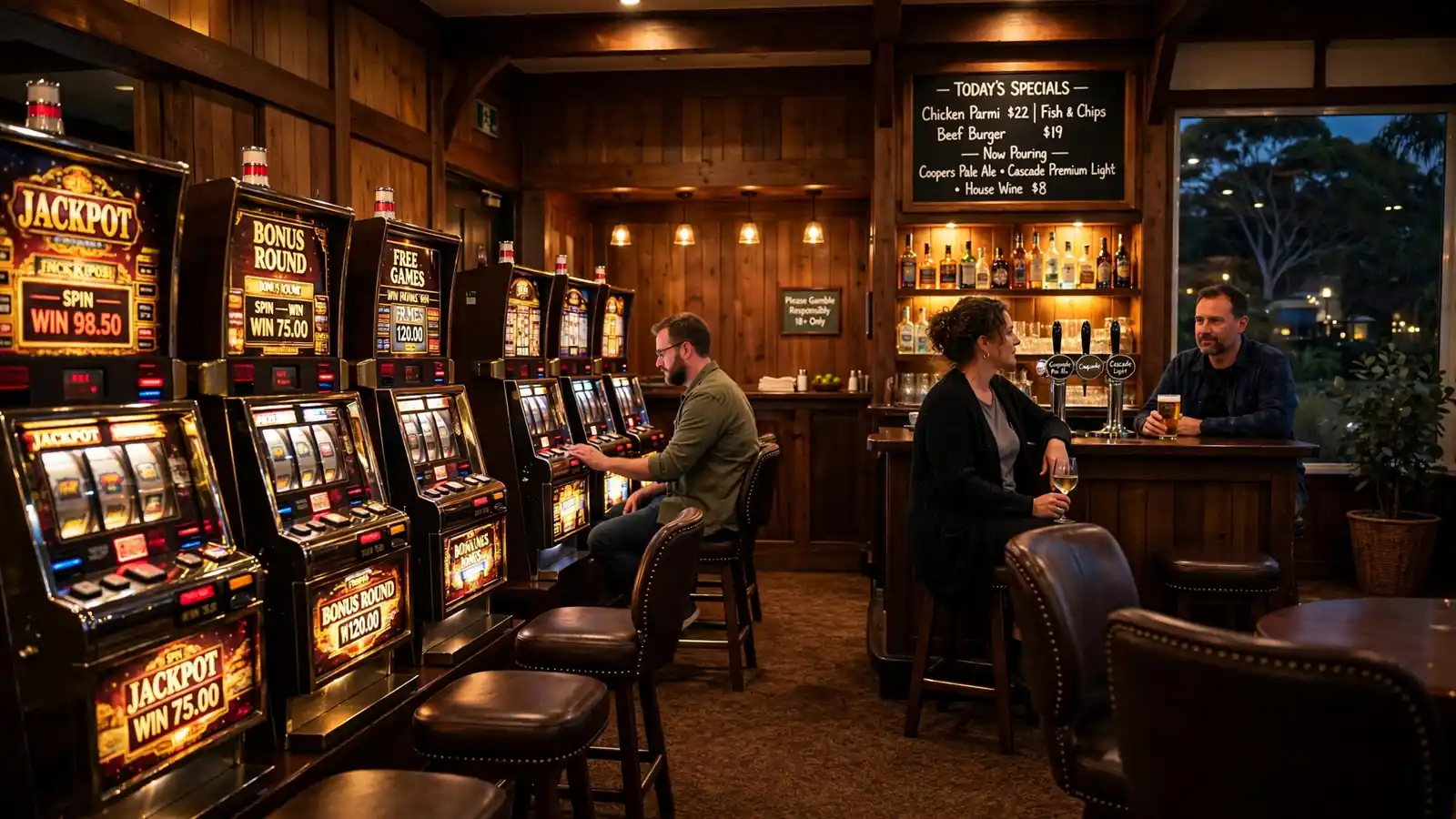
A venue’s general opening time and the hours when pokies are available are not necessarily the same thing. A club, hotel or entertainment venue may open for dining or other services while its gaming area follows a separate schedule. The distinction matters when looking for a place to play early in the morning, later at night, or at a particular point in the day.
An “open” label can also leave practical details unresolved. It may describe the venue as a whole rather than confirm that its gaming area is operating. A listing may show regular trading hours, while a public holiday, private function or temporary change affects the schedule on a particular date. Without a current venue-specific confirmation, a general opening time cannot establish that pokies are available at that moment.
For searches about Perth pokies open now, the useful question is therefore narrower than whether a business appears to be trading: are pokies operating at the venue at the time in question? That requires information tied to the location and the relevant day. A directory entry, map result or older listing may help identify a business, but it is not a substitute for a current schedule from the venue itself.
Early-opening searches often hinge on a precise hour. A venue that opens early for one service does not thereby confirm early access to its gaming area. The same applies to late-night searches: a venue remaining open does not, by itself, establish that pokies continue to operate until closing.
The most reliable check is a current statement issued by the venue that clearly applies to the gaming area, not just the building or its food and drink services. If the wording is ambiguous, direct confirmation from the venue can resolve whether the gaming area is operating at the intended time. The date matters as well as the hour, because a routine schedule may not describe a public holiday or a one-off change.
Third-party listings should be treated as a starting point rather than a final answer. They can be useful for contact details and broad trading information, but their hours may not distinguish between services within a venue. A result marked “open” can therefore answer the wrong question. The cost of relying on it is straightforward: a trip may be made on the basis of a schedule that never confirmed access to pokies.
A useful hours statement identifies the venue, the day it applies to, and whether it covers the gaming area. It should also make clear whether the schedule is a regular one or a date-specific update. If any of those details are absent, the statement may be too broad to support a decision about arriving at a particular time.
This is especially relevant where a search concerns very early access. Search wording can suggest that a venue operates from a particular hour, but wording in a listing is not proof that pokies are available then. A claimed start time should be checked against current information from the venue rather than inferred from its general trading status.
The same standard applies when hours appear in more than one place. If a venue’s own information and a directory listing differ, the discrepancy should be resolved before treating either schedule as dependable. An old page can remain visible after details change; the fact that it is easy to find does not make it current.
Opening times answer an operational question, not a question about game outcomes. A venue’s schedule does not establish the payout percentage of its pokies, and a payout claim does not confirm when its gaming area is operating. Those are separate details and should not be treated as evidence for one another.
For the same reason, an advertised venue opening time should not be converted into a claim that a particular Perth location is open now. “Open now” is time-sensitive: it depends on the venue, the date, the service being described and whether the information has been updated. A broad statement about Perth trading hours cannot settle those points for a specific gaming area.
The practical distinction is simple: general hours describe when a business may trade; venue-specific confirmation establishes whether pokies are operating at a particular time. Without that distinction, an opening-time result can look more precise than it is.
Choosing pokies to play in Perth in 2026 starts with checking the details that matter to you, such as licensing, deposit requirements and payout information. Use this list as a reference when considering your options.
LevelUp Casino
LevelUp Casino lists a Curacao eGaming licence held by Dama N.V. Its minimum deposit is A$15.
Vegaz Casino
Vegaz Casino lists a Curacao licence. Its minimum deposit is EUR 20.
GoldenCrown
GoldenCrown lists a Curacao Gaming Control Board licence held by Hollycorn N.V.
Golden Pokies
Golden Pokies lists a Curacao licence.
SpinsUp
SpinsUp lists a Curacao Gaming Control Board licence held by Dama N.V.
SkyCrown
SkyCrown lists a Tobique Gaming Commission licence. Its stated payout speeds are around 10–15 minutes for crypto and 1–5 days for fiat; the minimum deposit is A$30.
Roby Casino
Roby Casino lists a Curacao eGaming licence held by Roby Games Ltd.
MrPacho
MrPacho states payout speeds of 30–120 minutes for crypto and 24–72 hours for fiat. Its minimum deposit is A$30.
Neospin
Neospin lists a Curacao Gaming Control Board licence held by Hollycorn N.V.
Bizzo Casino
Bizzo Casino lists a Curacao Gaming Control Board licence held by TechSolutions Group N.V.
A claim that a pokie is “best-paying” is only useful if it identifies what is being compared. A game title alone does not establish its return setting, and a large win shown in an advertisement says nothing about the result of the next spin. For anyone comparing Perth pokies, the distinction is between a game’s stated theoretical return and the outcome of an individual session. Those are not interchangeable measures.
Each spin is generated independently by a Random Number Generator. The result of one spin does not make a particular result more likely on the next, and a run of losses does not create an overdue win. The same applies after a payout: the machine has no memory that would make a repeat result due or less likely. Past outcomes are records of what happened, not instructions for what comes next.
That is why “best-paying pokies in Perth” cannot be established by watching a machine, asking whether it has paid recently, or comparing a few players’ stories. A short run can look unusually generous or unusually poor without showing how the game performs over time. A jackpot display is evidence that a prize is available under the game’s rules; it is not a forecast of when it will be won.
Return to player, or RTP, is a theoretical measure of the share of wagers a game is designed to return across a very large volume of play. It is not a promise that a particular person will receive that share back, and it does not set a minimum return for a session. A result may fall far above or below a theoretical figure over a limited number of spins.
There is another complication: a specialist review has reported that some game providers allow casinos to choose between more than one RTP setting for a given pokie. If that applies to a title, the same game can have different stated return percentages in different casino environments. A comparison based only on the title or its advertised name may therefore leave out the detail that determines which return setting is in use.
The reported option should not be treated as proof that every provider or casino uses multiple settings. It does show why a percentage without context is incomplete. A meaningful comparison would need to identify the specific game version and the applicable RTP setting, rather than relying on a general figure attached to the title elsewhere.
A claim about “high returns” needs a clear basis. If it gives no RTP figure, setting or source, it cannot support a numerical comparison. If it does give a figure, the figure describes theoretical performance under the stated configuration; it does not tell a player what will happen during a visit. Neither a result seen on a screen nor a story about a recent win can substitute for that information.
Some game providers allow casinos to choose between more than one RTP setting for a given pokie, meaning the same game can have different return percentages in different environments.
This also limits comparisons between Perth casino pokies and games encountered in other settings. Similar names do not establish identical configurations, while identical configurations still produce separate random outcomes spin by spin. A claim about one version should not be carried over to another without evidence that the settings match.
“Best-paying” is therefore not a dependable label for predicting a personal result. At most, it can refer to a comparison of documented theoretical RTP settings, provided the exact configuration is known. Without that detail, the ranking is packaging rather than a calculation. Even with it, the figure describes a long-run property of the game, not a reliable estimate of what any short session will return.
A venue’s reputation and its obligations are separate questions. A label such as “best” does not establish the quality of a pokie, the standard of customer support or whether a particular venue meets a particular requirement. Those points need to be assessed separately; a ranking would not substitute for checking the rules that apply on site.
The minimum legal age for gambling in Australia is 18, including for pokies. That requirement applies regardless of whether gambling takes place in person or online. Venue procedures may include checking identification where age needs to be confirmed, but the central point is the legal threshold: a person under 18 cannot lawfully gamble.
Responsible-gambling duties are also relevant to venue operations. A report by regionriverina.com.au describes a requirement for venues with more than 20 gaming machines to have a dedicated Responsible gambling officer (RGO) on duty while those machines are operating. It also describes a one-month grace period for venues to remove signage and introduce the officer role. These details should be read as reported requirements, not as proof that every Perth venue has the same machine count, staffing arrangement or compliance status.
The same report describes a gambling incident register for recording occurrences, including situations in which a patron’s behaviour indicates possible gambling harm. A register is an operational record, not a public rating of a venue and not evidence, by itself, of how a particular incident was handled. For anyone comparing Perth gaming venues, that distinction matters: a formal safeguard can describe a process without establishing the outcome of every interaction.
Responsible-gambling measures have practical consequences beyond signage. An officer on duty, where the reported requirement applies, provides a designated role in the venue’s operating arrangements. An incident register creates a record of specified events. Neither measure makes gambling risk-free, and neither changes the age restriction. They are controls around venue operations, not a guarantee of a particular experience.
This is why venue-level comparisons should be kept narrow. A name appearing in a list of Perth pokies venues does not show whether it falls above the machine threshold in the report, whether an RGO is required there, or what procedures staff follow. Those are venue-specific matters. A general description of Australian age rules can be stated consistently; a particular venue’s staffing or records cannot be inferred from its location or reputation.
The same caution applies to requests for the best pokies venue in Perth. “Best” could refer to atmosphere, facilities, service or something else, but none of those qualities follows from a compliance requirement. Nor does compliance establish that one venue offers better pokies than another. Keeping these categories apart prevents an administrative rule from being mistaken for a recommendation.
For a useful assessment, the relevant questions are concrete: whether the person gambling is legally old enough, what responsible-gambling arrangements apply to the venue, and whether any claimed feature has been confirmed for that specific site. A venue’s own information can clarify its procedures, while the applicable rules determine what it is required to do. Without venue-specific confirmation, a city-wide claim about machine numbers, officers or incident records would go beyond what can responsibly be stated.
“Near Perth” can mean very different things depending on whether the reference point is Perth Airport, the central business district, or a suburb north of the city centre. A venue described as being in the Perth area is not necessarily close to the airport or convenient for a CBD visit. The word “near” is a label, not a distance measurement.
Airport searches have a specific practical purpose: finding somewhere that fits around a flight, transfer or stay nearby. A result’s wording alone cannot establish that it is inside the airport, within its grounds, or a short trip from a terminal. The same applies to searches for pokies at Perth Airport. An airport-related label may indicate a broad area or travel market rather than a venue’s precise address.
The CBD is a separate reference point. A place described as central may still be some distance from a particular hotel, station or street, while a venue elsewhere in Perth may be more accessible from a particular starting point. “Near the CBD” therefore needs a defined origin and a route, not just a suburb name or promotional description.
For airport travel, the relevant detail is the venue’s street address and its position relative to the intended terminal or accommodation. For a central Perth visit, the useful comparison is the address against the actual destination in the city. A map can help assess routes, but the result depends on the chosen starting point and travel mode. Straight-line proximity and practical travel time are not interchangeable.
This distinction matters especially when a search result combines “Perth” with a suburb or transport landmark. North Perth, for example, is not the same location as the CBD simply because both names include Perth. Likewise, “near Perth Airport” does not by itself establish that a venue is on airport property. The address, rather than the wording around it, is the location detail that can be checked.
Search wording can also be geographically unclear. “Perth VIC” may refer to an incorrectly labelled result, a different place, or a mistaken state association; it should not be treated automatically as a Perth, Western Australia venue. “Parkes Perth” is similarly ambiguous without a clear address. A place name joined to Perth does not prove that the place is in the city or close to it.
Attention Labels like "near Perth Airport" or "near the CBD" are promotional descriptions; only a specific street address can confirm a venue's actual proximity to a destination.
A useful venue listing should identify a physical address clearly enough to compare with the airport, the CBD or another named destination. If the listing gives only a broad area, the claim supports only that broad description. It does not establish a walking route, a short transfer, or proximity to a particular terminal. Those conclusions require an address and a route assessment.
The same standard applies to “near me” wording. It has no fixed geographic meaning without a specific starting location. A result may be relevant to one part of Perth and inconvenient from another. Suburb names, airport references and CBD labels narrow the search, but they do not replace checking the actual point on a map.
For a decision based on location, the sequence is straightforward: identify the intended destination, obtain the venue’s street address, then compare the route from that exact point. If the address or location description is too broad to make that comparison, the proximity claim remains unproven.
Crown Perth is a specific venue, but its name alone does not establish which pokies are available, how a gaming room is arranged, or what cash a particular machine can pay. Those are separate details, and a claim about one should not be treated as confirmation of the others.
A description such as “best pokies room” is especially imprecise. “Best” might refer to a player’s preference, a room’s layout, the games available or a claimed payout advantage. Without a defined measure and evidence for it, the label is an opinion rather than a useful comparison. It does not establish that a particular room has better odds or that a specific pokie pays more.
The same distinction applies to Crown Perth pokies. A venue name is not a machine specification. Game availability, game settings and cash payout conditions are not interchangeable facts. Even where a game title is known, that alone would not establish the return setting in use or the terms for a particular payout. A list of titles, if encountered elsewhere, would need a clear date and a reliable basis before it could be used to describe what is currently available.
The phrase “maximum cash payout” also needs precise definition. It could refer to a machine’s stated prize limit, a venue’s process for paying a win, or a condition attached to a particular game. Those are different matters. A figure without that context can look definitive while answering none of them. Nor does a headline prize establish the amount a player will receive on any spin: each spin is an independent random event.
For Crown Perth specifically, claims about machines, rooms and payout ceilings should therefore be read as claims requiring their own evidence, not as consequences of the venue’s name. A useful statement identifies what it concerns: a named game, a particular setting, or a payment condition. If it does not, there is no sound basis for turning it into a comparison or a cash expectation.
This is a narrower standard than declaring a venue “good” or “bad.” It separates a verifiable detail from a promotional label and prevents one attractive claim from carrying several unsupported implications. “Best” is not a measurement; a maximum is not a likely result; and a venue reference does not settle the terms of an individual machine. For Crown Perth, those distinctions matter more than a ranking built from ambiguous descriptions.
Claims regarding the "best pokies room" or "maximum cash payout" are often based on opinion or specific conditions. A venue name does not establish the return settings of individual machines or the terms of a particular payout, as each spin is an independent random event.
The Interactive Gambling Act 2001 prohibits companies from providing real-money online pokies to people in Australia without a domestic licence. No Australian online casino licences have been issued, so there is no Australian-licensed online casino. A Perth address does not change that position: an online service does not become lawful because it is described as local, offers a welcome deal or accepts a particular payment method.
The law targets providers, not individual players. That distinction does not make offshore play a protected transaction. The Australian Communications and Media Authority (ACMA) enforces the Act and blocks access to illegal offshore gambling sites; internet service providers must comply with its blocklist. Access may therefore be restricted, and a payment going through would not establish that a service is licensed or lawful.
The financial risk is clearest at withdrawal. If an offshore casino refuses to pay winnings, an Australian player has no legal recourse in Australia to compel payment. A displayed balance is not the same as money received, and an advertised bonus does not alter the legal position. Conditions attached to a no-deposit offer, a high-limit game or a claimed maximum bet cannot remove the risk that funds may not be recoverable. Promotional wording is not a substitute for enforceable local protection.
Identity checks can add another condition before cash-out. A specialist review reports that casinos may require verification before a first withdrawal, including identity and address documents and, in some cases, a selfie holding identification. These are claims about operator practices, not a guarantee that every service follows the same process. The practical consequence is that documents may be requested only after a balance has accumulated. Verification requirements should therefore be understood as a potential withdrawal condition, not proof of reliability.
Searches for online pokies in Perth, including requests for real-money play or a bonus, can make offshore offers appear comparable with an in-person venue. They are not. A land-based venue operates under a different framework, while real-money online casino-style games supplied to people in Australia fall under the federal prohibition on providers. Neither a Perth label nor a payment option changes the classification.
The relevant calculation is not simply deposit versus advertised winnings. It is the amount deposited, the terms attached to any offer, whether identity documents are accepted, and whether a withdrawal can actually be completed—with no Australian legal remedy if an offshore operator refuses payment. No Australian licence is available to verify for an online casino, and ACMA’s blocking activity means offshore access is not assured. A deposit should not be treated as recoverable funds merely because an account shows a balance.
A claim of 24-hour pokies availability is narrower than a general statement that a venue is open late. It means pokies can be played at any time, including overnight; a venue’s doors being open does not establish that its gaming area is operating throughout the same period. The distinction matters when planning around a particular hour rather than simply looking for a late closing time.
There is a practical distinction between a venue being "open 24 hours" and "pokies available 24 hours," as the gaming area may follow a different schedule than the general building.
Perth opening hours are not interchangeable across venues. A schedule for one location cannot establish the hours of another, and a general venue listing may not specify when pokies are available. Even where a listing gives opening and closing times, those times need to be read as applying to the stated venue and date, not as a city-wide timetable.
“Open now” is also time-sensitive. A result may reflect general business hours rather than the current status of the gaming area, and hours can change. A listing without a clear date or an explicit statement about pokies operation is not enough to establish overnight availability. The practical check is venue-specific: confirm the relevant location’s current schedule and whether pokies are operating during the intended period.
The wording of hours can create a further mismatch. “Open 24 hours” may describe a venue or a service, while “pokies available 24 hours” describes access to the machines themselves. Those are not equivalent statements. A late-night closing time also does not mean continuous operation; it only describes a closing point, if the schedule is current and applies to the area in question.
For a useful comparison, the schedule should identify the venue, the day it applies to and the operating hours of the pokies area. If only the venue’s general hours are shown, the pokies schedule remains a separate point to confirm. A broad label such as “24-hour venue” should not be treated as confirmation of round-the-clock play.
The same distinction applies to searches for Perth pokies hours generally. General opening times can help narrow down when a venue may be accessible, but they do not establish that pokies are available at every hour the venue is open. A reliable answer therefore depends on the specific location and its current operating information, not on a city-wide assumption or a label detached from its context.
“Perth CBD” describes a central-city search area, not a particular pokie venue. A result that mentions the CBD does not, by itself, establish where a club is, whether it has pokies, or whether its details are current. Those are separate checks, and a venue name in a directory or map listing is not a substitute for confirmation from the venue.
That distinction matters when comparing clubs around central Perth. Proximity to an address, transport stop or landmark cannot be inferred from a general CBD label. Nor does a broad description such as “Perth club” establish that the premises are inside the central business district. A usable location check needs a street address and a current map reference; a venue’s own information can then confirm whether the premises and facilities match the listing.
“Best pokies” is also not a location category. A CBD label says nothing about a game’s return setting or likely result. Each spin is an independent random event determined by a Random Number Generator, so a previous result does not predict the next one. Some providers allow casinos to choose from more than one RTP setting for a game, meaning the same title can have different settings at different casinos. A central address, where confirmed, cannot establish which setting applies.
Legal Risk
Real-money online pokies provided to people in Australia without a domestic licence are prohibited under the Interactive Gambling Act 2001, leaving players with no legal recourse if offshore operators refuse payment.
Self-exclusion is a separate consideration from finding a club. Deposit limits, loss limits, session time limits and self-exclusion are responsible-gambling tools. BetStop applies only to Australian-licensed operators; it does not bind offshore sites. It should not be treated as a control over every gambling service simply because the person is in Perth.
The legal age for gambling in Australia is 18. That requirement does not turn a CBD-wide description into confirmation of a specific venue’s entry conditions or facilities. The practical distinction is straightforward: central Perth is an area, while a club is a particular premises with its own address and information. Keeping those categories separate prevents a broad location label from carrying claims it cannot support.
Perth is in Western Australia. South Australia is a separate state, so information associated with South Australia does not establish anything about a venue in Perth. The distinction matters when a result uses broad wording such as “Australia” but gives a location elsewhere: the country may match while the state does not.
A request for pokies in Perth, Australia, is geographically narrower than one about South Australia. A venue described as being in South Australia cannot be treated as a Perth option, and a reference to Perth does not identify a South Australian venue. State names are not decorative details; they determine whether a location is relevant at all.
The same separation applies to claims that South Australian pokies are open. A state-level phrase does not identify a particular venue, establish its address, or confirm its operating status. Those details need to correspond to the named place and venue. Without that link, the wording is not enough to support a practical decision.
For location checks, the useful evidence is specific: the venue’s stated address and the state in which that address sits. A city name alone may be insufficient if the surrounding description is vague or uses “Australia” as a broad label. Conflicting state references should be treated as a mismatch, not silently reconciled.
Perth and South Australia therefore belong in separate location checks. South Australian references do not extend a Perth list, and Perth information should not be presented as covering South Australia. Keeping the state attached to each venue prevents a geographic label from being mistaken for a confirmed local option.
A cashless payment method and a cashless pokie are not the same thing. PayID identifies a bank transfer destination using an email address, mobile number or Australian Business Number (ABN). It operates through the New Payments Platform (NPP), Australia’s bank-transfer infrastructure.
That describes how a transfer can be addressed; it does not show that a Perth venue accepts PayID, offers cashless play or has any particular payment arrangement for its pokies. Those are separate venue-specific details. A payment label found online cannot substitute for confirmation from the venue.
The NPP is supported by all major Australian banks, and its transfers use end-to-end encryption. Those features describe the payment network, not the gambling service receiving a payment. PayID support does not establish that a service is licensed, that its games are fair, or that its payout information is reliable.
The distinction matters when payment information appears beside claims about pokies. A bank-transfer option is not evidence of a land-based cashless system, and the existence of PayID does not make an online gambling service lawful for Australian operators to provide. Payment method and legal status are separate questions.
Searches that combine Perth with another city, such as Newcastle, do not change what PayID means. Nor do they confirm that a venue in either place accepts it. Location, machine access and payment acceptance each require their own evidence; one cannot be inferred from the other.
For Perth venues, the useful distinction is therefore narrow: PayID is a transfer identifier within the NPP, not a directory of cashless pokies or a venue-payment guarantee. A claim about a specific venue needs to refer to that venue’s own confirmed payment arrangements.
Yes, Australians can legally play on offshore sites that accept them, but offering real-money online pokies to Australians without a domestic licence is illegal. No Australian-licensed online casino exists, and players have no legal recourse in Australia if an offshore site withholds winnings.
You must be at least 18 years old to gamble online in Australia.
Yes. Some game providers let casinos choose between different RTP settings, so the same game can have different return percentages at different casinos.