POLi availability depends on the specific operator, service and transaction, not on general Australian payment habits.

POLi acceptance is a specific payment-compatibility claim, not a general feature of Australian online payments. A payment service can be familiar to consumers without being available in a particular cashier. The fact that Australians commonly use bank-linked services alongside cards and mobile wallets does not establish that POLi is supported by an online casino, or that a transaction through it would be permitted.
The distinction matters when a site is described as accepting POLi for online casino or pokies activity. The wording can imply that the payment option is available across the operator’s service, but payment methods may be shown only for certain account types, locations or transaction purposes. A broad label is therefore not enough to establish actual compatibility. Nor does a mobile-friendly site establish that POLi can be used from a phone; the device and the payment option are separate questions.
A reliable compatibility assessment would need to identify the operator and the exact service being described, then confirm that POLi appears as an available method for that service. A general statement about POLi, a logo on a page, or an old review cannot by itself establish what a current cashier offers. Payment arrangements can change, so a claim without a clear operator and a current context has little practical value. That is not a reason to infer support from silence; it is a reason to leave the claim unconfirmed.
POLi availability can be important when choosing an Australia-facing casino, but the details available here do not confirm which payment methods each operator accepts. Use these notes as a brief reference and verify POLi availability directly with the casino before depositing.
LevelUp Casino
LevelUp Casino lists a Curacao eGaming licence held by Dama N.V. Its minimum deposit is A$15.
Vegaz Casino
Vegaz Casino lists a Curacao licence, OGL/2024/1335/0780. Its minimum deposit is EUR 20.
GoldenCrown
GoldenCrown lists a Curacao Gaming Control Board licence, OGL/2023/176/0095, held by Hollycorn N.V.
Golden Pokies
Golden Pokies lists a Curacao licence. No deposit or payout details are provided here.
SpinsUp
SpinsUp lists a Curacao Gaming Control Board licence, OGL/2023/174/0082, held by Dama N.V.
SkyCrown
SkyCrown lists a Tobique Gaming Commission licence and a minimum deposit of A$30. Its stated payout times are around 10–15 minutes for crypto and 1–5 days for fiat.
Roby Casino
Roby Casino lists a Curacao eGaming licence held by Roby Games Ltd. No deposit or payout details are provided here.
MrPacho
MrPacho lists a minimum deposit of A$30. Its stated payout times are 30–120 minutes for crypto and 24–72 hours for fiat.
Neospin
Neospin lists a Curacao Gaming Control Board licence, OGL/2023/176/0095, held by Hollycorn N.V.
Bizzo Casino
Bizzo Casino lists a Curacao Gaming Control Board licence held by TechSolutions Group N.V. No deposit or payout details are provided here.
Searches that combine “Australian,” “online casino” and POLi can also blur two separate ideas: whether a payment method is accepted by a business, and whether that business may lawfully offer the service to people in Australia. The Interactive Gambling Act 2001 prohibits operators from providing real-money online casino games, including pokies, to people physically located in Australia. The Australian Communications and Media Authority is responsible for enforcing that law. Payment compatibility does not change the legal status of the underlying service.
Accordingly, a statement that a cashier supports POLi would not amount to an endorsement or a finding that the casino is authorised to serve Australian residents. Offshore consumer protection is also not supplied by the payment method: Australian consumer law does not protect players using offshore casinos. A payment option is a transaction route, not a substitute for legal permission, consumer safeguards or a remedy if a dispute arises.
There is a further distinction between a payment method being technically listed and a payment actually being available to a particular customer. Account checks, payment-provider rules and the operator’s own terms may affect whether a transaction can proceed. Those conditions would need to be established for the specific service. They should not be filled in by analogy with another method or another operator. POLi cannot be assumed to work merely because a site accepts bank-linked payments generally.
 Casinos That Accept Tether USDT in Australia: Payment ChecksLearn how cashier labels differ from confirmed payment terms, what bonus conditions require checking, and why crypto listings do not verify USDT…
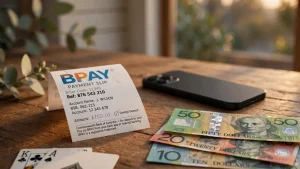 BPAY at Australian Casino Sites: What Is VerifiedAvailable evidence does not confirm BPAY acceptance. Learn what to check in a casino cashier and how card deposits, withdrawals and fees…
The same caution applies to phrases such as “best” or “new” when attached to POLi pokies. Those descriptions do not establish that any named site supports POLi, and they do not resolve whether the casino service may be offered in Australia. A ranking built around an unverified payment label can turn a broad claim into an apparent recommendation. The label may be doing more work than the evidence behind it.
For online casino payment compatibility, the useful question is therefore narrow: is there current, operator-specific evidence that POLi is available for the stated service? That question should not be confused with whether POLi is a familiar payment service, whether a site has a mobile version, or whether a page calls a casino Australian. Each is a different claim, and none proves the others.
Without confirmation tied to the operator’s current payment terms, POLi acceptance should not be treated as established. More importantly, an apparent payment route does not make real-money online casino play lawful for people in Australia. Compatibility and legality are separate tests; passing one would not settle the other.
A stated deposit amount is meaningful only when it is tied to a payment method, an operator’s current terms and the transaction’s currency. A figure such as $10, attached to POLi and a casino deposit, does not establish that the amount is available. It could refer to an advertised minimum, a general account threshold or a figure copied from an outdated description. Those are different claims, and none can be treated as a POLi payment term without current, operator-specific confirmation.
Attention: A general minimum deposit amount does not guarantee that the same limit applies to POLi transactions; specific operator terms must be confirmed.
Deposit conditions are not interchangeable across payment methods. A minimum shown for a card, mobile wallet or bank-linked service cannot be carried over to POLi by assumption. Nor does a general minimum deposit establish that every amount above it can be paid through a particular method. The cashier’s displayed options and the applicable account terms would have to correspond to the same operator, payment route and currency. A number detached from those details is not a reliable basis for a financial decision.
The amount alone is also not the full cost. A deposit term can include a fee, a currency conversion charge, a processing restriction or a condition tied to account status. The amount entered may therefore differ from the amount charged or credited. Any POLi-specific assessment would need to distinguish the amount submitted from any separate charge and from the final account balance. Without those details, describing a small deposit as available or cost-free would turn an unverified assumption into a financial claim.
The distinction matters particularly for a low figure. If a casino’s general minimum is $10, that does not show that a $10 POLi transaction would be accepted. A payment route may have its own minimum or other conditions, and a cashier may not offer that route at all. Conversely, a payment option appearing in a general list does not prove that it can be used for the amount in question. The terms must match at the point of transaction; resemblance between two figures is not evidence of compatibility.
 Casinos That Accept PayID in Australia: What to KnowLearn what the available evidence does and does not confirm about PayID casino deposits, and how Australian law treats offshore real-money casino…
 Casino Sites That Accept Osko in Australia: What’s VerifiedLearn what an Osko-related casino search can establish, why payment acceptance needs separate verification, and how it differs from game availability.
Australian payment habits do not settle the issue. Contactless card payments and mobile wallets are accepted almost everywhere in Australia, and consumers commonly move between cards, mobile wallets and bank-linked services such as PayPal. That broad familiarity does not establish the availability or deposit conditions of POLi at an online casino. A payment service being familiar in everyday transactions is not the same as being offered for a particular gambling transaction.
There is also a material legal limit to the context in which these deposit claims arise. Under the Interactive Gambling Act 2001, operators cannot provide real-money online casino games, including poker, table games and pokies, to people located in Australia. The Australian Communications and Media Authority enforces that law. Offshore casino availability, a payment reference or a displayed deposit amount does not change the operator-side prohibition. Australian consumer law does not protect people who use offshore casinos, so a posted amount or payment term should not be mistaken for a locally protected offer.
This makes the wording of a deposit claim important. “A $10 deposit is possible” is not merely a statement about arithmetic: it implies that a particular operator accepts that sum through a particular method under stated conditions. “A casino accepts POLi deposits” is a separate claim about payment availability. Combining the two does not make either one more certain. A sound description would need to identify the operator, the payment method actually presented, the minimum and maximum applicable to it, any fees or conversion terms, and the conditions governing the account. No generic figure can substitute for that set of terms.
Legal Restriction
Under the Interactive Gambling Act 2001, operators are prohibited from providing real-money online casino games, including pokies, to people located in Australia.
A deposit amount also says nothing by itself about whether a transaction will be completed. A displayed minimum is not a promise that an individual payment will be approved, and a failed payment does not establish that the amount was below the operator’s threshold. The payment method, account requirements and operator-side rules are separate parts of the transaction. Treating them as one condition obscures where a restriction applies.
For that reason, small-deposit wording should be read narrowly: it describes an amount only when the relevant POLi terms explicitly attach that amount to the payment route and the applicable account conditions. A low minimum, if genuinely offered, would not make an otherwise prohibited service lawful in Australia or create consumer protection for offshore use. The figure is packaging; the operative terms and legal position determine what it means.
A label such as “POLi casino” is not, by itself, evidence that an operator accepts POLi. A site-level claim needs to identify the operator and describe what the payment option actually does. Without that detail, “accepts POLi” can mean several different things, and a ranking headed “best” adds no proof of any of them.
Evidence should be specific to the operator and current terms. A payment logo, a general statement about local banking, or a third-party list does not establish that POLi is available to a particular customer. Nor does a page describing POLi in general establish a connection between the service and a casino cashier. The relevant question is whether the operator’s own payment information clearly names POLi and sets out the applicable conditions.
That distinction matters when a site is described as one of the best places to make POLi deposits. A deposit claim is narrower than a general acceptance claim: it must show that the method can be used for that transaction, rather than merely appearing in an article or promotional graphic. A separate statement would be needed to support claims about withdrawals. Combining both into a single “POLi casino” label can make an unsupported inference look like a complete payment service.
“Best” is also a judgement, not a payment fact. A credible comparison would need transparent criteria, such as whether the payment method is explicitly listed by the operator, what transaction functions are supported, and whether the published terms are consistent. If a ranking does not explain how its entries were checked, the ranking itself cannot fill the evidence gap. A long list is not stronger evidence than a short one; it is simply longer.
The same standard applies to claims about a POLi casino site, website, or group of sites. The name of a payment service beside a casino brand is not enough to show that a transaction will be accepted. Payment availability can depend on the operator’s current cashier and terms, and a general page may not describe the conditions that apply to a particular account or transaction. The claim should therefore be read at the level it actually supports, not expanded into broader promises.
Australian law is a separate and decisive part of the assessment. Under the Interactive Gambling Act 2001, operators may not provide real-money online casino games, including pokies, to people physically in Australia. The Australian Communications and Media Authority enforces that law. Offshore casino services may also be blocked, and Australian consumer law does not protect people using offshore casinos. Those points do not establish whether a website offers POLi; they do change the significance of a payment claim. A payment badge cannot make a prohibited service lawful or create local consumer protections.
There is no need to treat every claim as equally reliable. Operator-published terms can be checked for a direct, unambiguous statement about POLi; an independent description should identify what it verified and when. If the wording is vague, the scope should remain vague too. “Supports local payments” is not the same as naming POLi. “POLi deposits” does not establish POLi withdrawals. A rating does not demonstrate either.
Claims about the best POLi pokies sites require particular care: describing a site in connection with pokies can function as promotion of online casino gambling, which is prohibited for Australian audiences. A comparison cannot cure that problem by presenting itself as neutral or informational. The legal status is not a footnote to a payment review; it governs whether the underlying service may be offered to people in Australia.
Accordingly, a defensible site-level statement must be limited to what the operator’s own current payment terms expressly confirm, while avoiding promotional rankings and implied endorsements. If those terms do not clearly identify POLi and the transaction covered, the claim should not be treated as established. No payment label changes the legal position of real-money online casino services in Australia.
“Instant withdrawal” and “real-money play” are separate claims. The first concerns how quickly a payment reaches a player after a withdrawal is requested; the second concerns whether an operator provides gambling for money to someone in Australia. Combining them in a description does not establish either claim, and one cannot be used as evidence for the other.
A payment method’s presence in a cashier would not, by itself, show that it is available for withdrawals. Nor would it establish the time between a request, an operator’s processing decision and receipt of funds. Those are distinct stages, governed by the relevant service’s terms and payment arrangements. Without those details, a claim that POLi provides an instant casino withdrawal has no measurable settlement condition behind it. “Instant” is a label, not a completed calculation.
The real-money part has a different and decisive context. Under the Interactive Gambling Act 2001, operators must not provide online casino-style gambling for money to people located in Australia. The restriction covers games such as poker and table games as well as other casino formats. The Australian Communications and Media Authority is responsible for enforcing that law. A payment claim cannot make the provision of a prohibited service lawful.
The legal position also matters when a site describes itself as Australian-facing while operating offshore. The prohibition applies to operators providing the service to people in Australia, even if the operator is based elsewhere. The law does not make an individual player criminally liable merely for using an offshore site, but that does not turn the service into a lawful local casino option. Australian consumer law does not protect players using offshore casinos, leaving a material difference between a payment promise and an enforceable local consumer remedy.
Australian consumer law does not provide protection for players using offshore casinos, creating a gap between a payment promise and an enforceable remedy.
A phrase such as “instant POLi withdrawal” therefore needs more than a method name and a speed adjective. It would need clear, operator-specific terms defining what event starts the clock, what counts as completion, and whether the method is actually available for outgoing payments. None of those points can be inferred from the wording of a promotional claim. A statement about real-money availability would also have to be considered against the Australian prohibition, rather than treated as a routine feature comparison.
The same distinction applies when “no deposit” or a bonus is added to the wording. Those terms concern a promotion, not proof of withdrawal speed or lawful availability. A bonus label does not supply missing payment conditions, and it does not change the legal status of real-money online casino services offered to people in Australia. Promotional wording can bundle several promises together; it cannot make them equivalent.
For an Australian reader, the useful assessment is consequently narrow: a speed claim is not evidence of a completed payout, POLi wording does not establish that withdrawals are supported, and “real money” does not override the rules governing online casino services in Australia. Offshore use also carries a consumer-protection gap. The claims should be read as separate statements, not as a single verified package.
A year attached to a payment-method question makes the answer time-sensitive. Whether a service appears in an operator’s payment information can change, so a claim about POLi in 2026 would need current, operator-specific confirmation. A general statement that a casino accepts online payments would not establish that it accepts POLi, and an old reference would not establish present availability.
Australia’s familiar payment habits do not fill that gap. Contactless card payments and mobile wallets are widely accepted in everyday commerce, and consumers are comfortable moving between cards, wallets and bank-linked services such as PayPal. Those facts describe broader payment use; they do not show that POLi is supported by any particular gambling operator. Nor does a debit-card reference prove POLi acceptance: a card payment and a bank-linked payment service are distinct options.
The wider legal setting is decisive. Under the Interactive Gambling Act 2001, operators may not provide real-money online casino games, including pokies, poker and table games, to people physically located in Australia. The Australian Communications and Media Authority enforces that law. Offshore availability or a payment option displayed elsewhere does not change the prohibition on providing those services to people in Australia.
This also changes what “best” can sensibly mean in a request for a casino using POLi. A payment label alone cannot establish lawful availability, consumer protection or the terms of a transaction. Australian consumer law does not protect players who use offshore casinos. A site’s marketing language is not a substitute for those legal and consumer considerations, and naming an operator as a suitable choice would turn a payment claim into a recommendation.
For a 2026 statement of POLi acceptance to be accurate, it would need to be based on current evidence that identifies the operator, the relevant market and the exact payment method. It would also need to distinguish a live option from a generic reference to bank payments or a service that may no longer be offered. Without that level of confirmation, a list of casinos said to accept POLi would present uncertainty as a settled fact.
The year is therefore not decoration. It sets the date against which availability would have to be checked, while the Australian legal framework sets a separate boundary: online casino games cannot lawfully be offered to people in the country. Those are different questions, and a payment claim answers neither by itself.
A payment method and a game are separate parts of an online service. A game title does not, by itself, establish which payment methods an operator accepts; payment availability is determined at the operator and cashier level. The same distinction applies when POLi is mentioned alongside casino games: the wording connects two features, but it does not establish that a particular game can be funded through POLi.
That distinction matters because game-specific labels can imply more than they demonstrate. A reference to POLi and a casino game is not confirmation that POLi appears as a cashier option, that a transaction can be completed, or that the game is lawfully offered to people in Australia. Those are separate questions, and a claim about one does not answer the others.
The legal position sets a further boundary. Under the Interactive Gambling Act 2001, operators cannot provide real-money online casino-style services to people in Australia. The restriction covers services involving games such as poker, blackjack, roulette and pokies. The Australian Communications and Media Authority enforces the Act. Describing a payment method as compatible with a game does not change the rules governing the service itself.
There is also a difference between an operator’s payment arrangement and the rules attached to an individual game. A cashier may display payment methods independently of the games catalogue, while a game’s presence on a site says nothing about how that site handles payments. Neither detail establishes that POLi is accepted or that any POLi-funded game activity is available to Australians.
Offshore availability should not be treated as consumer protection. Australian consumer law does not protect people using offshore casinos, so a payment label or game listing is not a substitute for legal recourse. The law does not impose a fine or criminal prosecution on an individual merely for playing at an offshore casino, but that does not make the operator’s service lawful in Australia or make it a protected transaction.
The useful reading of game-and-POLi wording is therefore narrow: it describes a claimed relationship between a payment method and casino-style entertainment, not proof of a working payment route or a permitted real-money service. Game names, cashier displays and promotional descriptions each concern different parts of the arrangement. Treating them as interchangeable turns a label into a conclusion, with no basis for doing so.
The word “Australian” can describe several different things: the player’s location, the operator’s business or licensing base, or the market a payment method is said to serve. Those meanings are not interchangeable. A casino described as Australian is not thereby shown to be available to people in Australia, and a POLi reference does not establish that the payment method is accepted.
In the context of casino searches, "Australian" may refer to the player's location, the operator's licensing base, or the intended target market, but it does not prove lawful local provision.
The legal position sets an important boundary. Under the Interactive Gambling Act 2001, operators must not provide real-money online casino games, including pokies, to people physically in Australia. The restriction concerns the service offered to someone in the country; the label attached to an operator does not change it. The Australian Communications and Media Authority is responsible for enforcing the Act.
“Available in Australia” can therefore give a misleading impression if it is used as a shortcut for lawful local provision. Offshore sites may be described as serving Australian players, but that wording does not make their casino games lawful to offer in Australia or establish that a particular payment option works. Nor does a site’s use of Australian currency, an Australian-themed page or a local-facing description prove that it has a domestic status.
The payment question is separate from the geographic label. Australian consumers are accustomed to cards, mobile wallets and services linked to bank accounts such as PayPal. That broader familiarity says nothing specific about POLi acceptance at a casino. Payment methods are determined by the particular service and its available cashier options; the word “Australian” cannot substitute for that confirmation.
There is also a consumer-protection distinction. Australian consumer law does not protect players who use offshore casinos. That matters when evaluating claims that a site is “for Australia”: the phrase may refer to its intended audience, not to local authorisation or the protections available under Australian law.
A precise reading separates location, operator identity, legal status and payment compatibility. None follows automatically from the others. In this context, “Australian” identifies the market being discussed, not proof that an online casino may lawfully provide real-money games to people in Australia or that POLi is available there.
A withdrawal through POLi is a separate facility from making a deposit with POLi. A payment option shown for adding funds does not, by itself, establish that the same service can receive a payout. Deposit and withdrawal routes can be governed by different cashier settings and account conditions, so the word “POLi” alone does not describe a complete transaction.
For any payment method, the relevant distinction is between the route used to send money to an account and the route an operator permits for returning a balance. The cashier’s withdrawal options and the applicable terms define that route. A payment name appearing in one part of a cashier should not be read as confirmation that it is available in another.
Account checks are another separate condition. Online casinos typically require customers to complete a Know Your Customer assessment before financial transactions. That requirement concerns identity and transaction processing; it does not establish which payment methods are available for deposits or withdrawals.
The legal setting in Australia is decisive. Under the Interactive Gambling Act 2001, operators must not provide real-money online casino games, including pokies, to people physically located in Australia. The Australian Communications and Media Authority enforces the Act. Offshore services may be blocked, and Australian consumer law does not protect players who use offshore casinos. A payment label cannot change the legal status of the service or create local consumer protection.
Attention: A payment method listed for deposits does not automatically mean it is available for withdrawals, as these routes are governed by different settings.
That makes “withdrawal through POLi” a specific claim about a particular transaction route, not a synonym for general payment acceptance. It concerns whether an outgoing payment can be made through that method, under the operator’s stated terms and account checks. It does not follow from a deposit reference, a game description, or a site’s use of the word “Australian.”
For Australian residents, the practical and legal context cannot be separated from the payment wording. A description of POLi as a withdrawal option would need to be read as a claim about an operator’s process, not as evidence that real-money casino services are lawfully available in Australia.
A request to pay with POLi is narrower than a general question about casino payments. It asks whether POLi is offered as a payment method and, if so, how a transaction is handled. That cannot be answered by treating POLi as interchangeable with cards, mobile wallets or bank-linked services. Each method has its own availability and terms, and a payment label alone would not establish how it works.
A complete description of a POLi transaction would need to identify the method’s presence in the cashier, the steps required to authorise payment and the conditions attached to the transfer. Those details should not be inferred from the fact that Australians use bank-linked services or other digital payment options. Familiarity with a payment category is not evidence that a particular casino accepts a particular service.
The same distinction applies to searches that combine POLi with pokies or other casino games. The payment method and the game are separate questions; naming them together does not establish that the combination is available. Nor does a general reference to a casino payment method establish whether it concerns a deposit, a withdrawal or both.
There is also a legal boundary around real-money online casino services in Australia. The Interactive Gambling Act 2001 prohibits operators from supplying online casino games, including poker, table games and pokies, to people in Australia. The law targets operators; it does not make an individual player’s use of an offshore site a criminal offence. Australian consumer law does not protect players using offshore casinos, which is a material risk when considering any payment arrangement.
POLi should therefore not be described as a confirmed way to fund casino play in Australia. A payment claim requires operator-specific confirmation, while the legal status of the service remains a separate issue. A payment option, even if displayed, would not change the restrictions on operators or provide Australian consumer protection.
A promotion and a payment method are separate terms. A bonus advertised alongside POLi would need its own conditions: who qualifies, which deposits count, whether the offer applies to new or existing accounts, and what restrictions govern any reward. The presence of a payment logo would not establish any of those points.
The promotion itself also needs to be distinguished from the transaction used to fund an account. An offer can have eligibility rules independent of the cashier, while payment acceptance says nothing about bonus availability.
For Australian readers, there is a more fundamental limit. The Interactive Gambling Act 2001 makes it illegal for operators to provide real-money online casino games to people physically located in Australia. Casino-style games, including poker, blackjack, roulette and pokies, fall within that prohibition. A bonus does not alter the legal status of the underlying service, and Australian consumer law does not protect players using offshore casinos.
Bonus language should therefore be assessed as a claim, not as evidence of an available or lawful offer. A reference to POLi and a reward in the same promotion would still leave the key terms unresolved: the applicable conditions, any restrictions, and whether the offer is directed at Australian residents. Advertising real-money online casino services to Australian audiences is prohibited, and promotions cannot make such services permissible.
The practical distinction is straightforward: payment wording concerns a transaction; bonus wording concerns an inducement and its conditions. Neither should be read as proof that an Australian player can lawfully access the advertised casino service.
Jackpot City Casino, Spin Palace, Ruby Fortune, Ignition Casino, Joe Fortune and PlayAmo are listed as operators supporting Amex deposits for Australian players. Check the cashier before depositing, as payment options can vary.
Check the casino’s cashier for American Express as an available deposit method. If it is listed, select it, enter your card details and the amount in AUD, then submit the payment.
Yes, an Amex gift card can be used to deposit at casinos that accept American Express, but it can’t be used to withdraw winnings.
Check whether Amex or your Australian bank has blocked gambling payments to that website. Banks may block gambling-related Amex transactions, and Amex may block payments to particular sites.
Amex deposits are typically free, but a casino may add a 1.5% surcharge, and Amex cards can incur a 3% currency conversion fee. Withdrawal fees may also apply.
Yes. Deposit and withdrawal limits are set by each casino and can vary; Amex limits are usually higher than those for Mastercard and Visa.
Some casinos do not allow withdrawals to Amex, and you generally need to have deposited with Amex first. Where available, an Amex withdrawal can take up to five days to clear and may incur a fee.