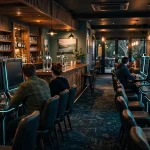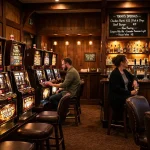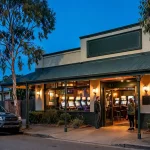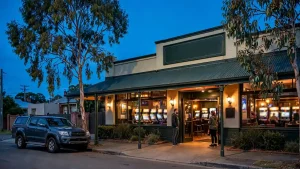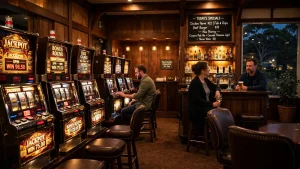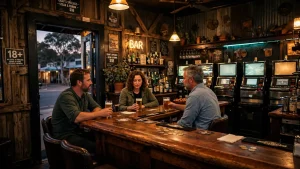
A game title or RTP figure alone cannot confirm a venue’s setting, opening status, location, or payment options.
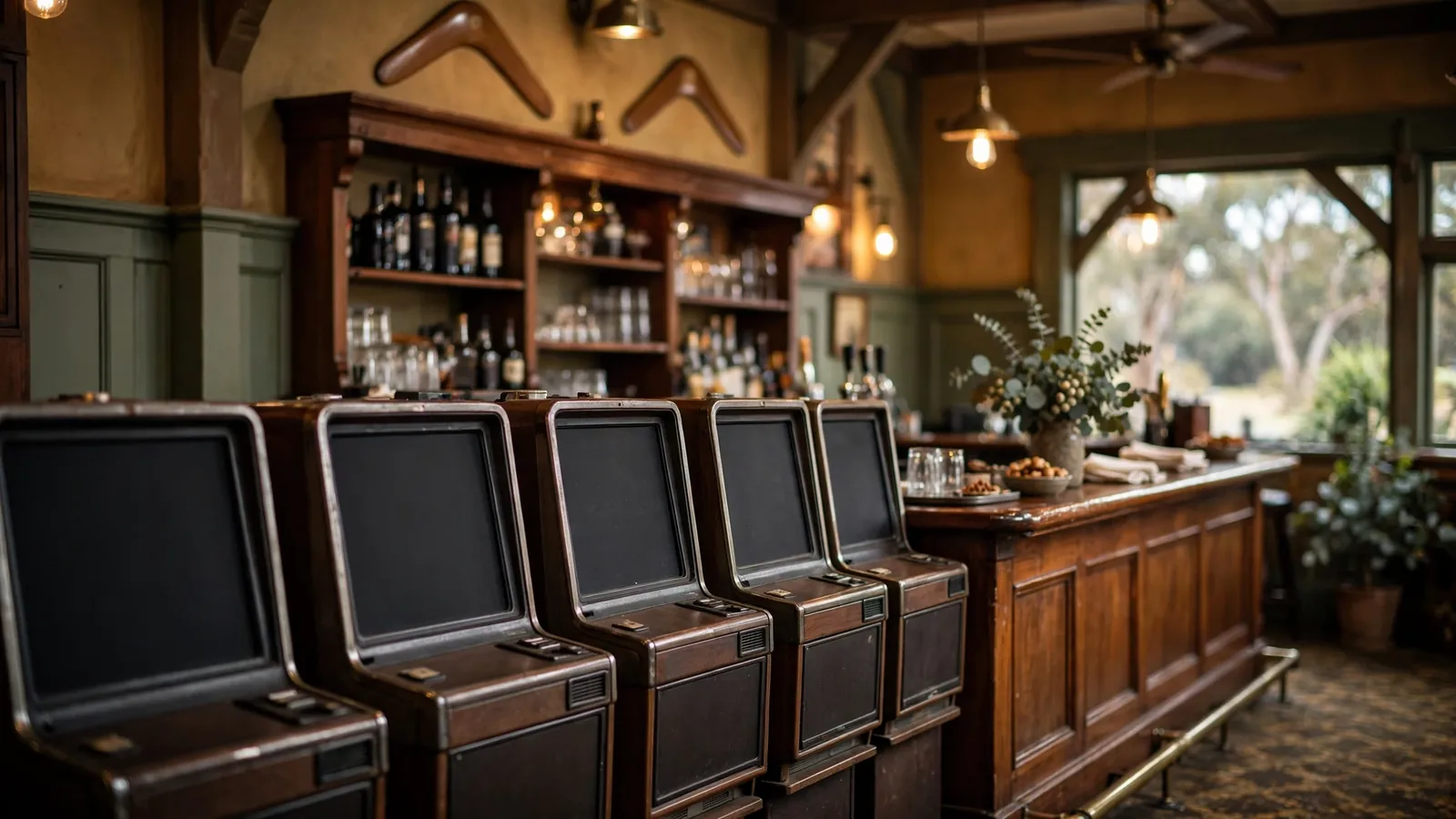
A claim that a pokie is among the “best” in South Australia needs more than a familiar title or a high return-to-player figure. It needs evidence tied to the particular game setting being offered, and a clear basis for comparing that setting with others. Without those details, “best paying” is a label, not a result that can be checked.
The distinction matters because a game’s name alone may not identify its return setting. A specialist review reports that some providers allow casinos to choose among multiple RTP settings for the same pokie. On that account, an identical game could carry different return percentages at different casinos. This is a reported possibility, not proof that every provider or venue uses selectable settings. Nor does it establish which setting applies at any particular South Australian venue.
RTP, or return to player, is a statistical measure associated with a game setting. It does not state what an individual player will receive, or how much a particular session will return. Even when a percentage is published, it cannot be read as a forecast for the next visit. The number describes a longer-run mathematical expectation; the cash outcome of a session can depart sharply from it.
Choosing pokies in South Australia is easier when you can quickly check what is disclosed about each operator. These short verdicts highlight the available licensing, deposit and payout details without assuming anything beyond them.
LevelUp Casino
LevelUp Casino lists a Curacao eGaming licence, OGL/2023/174/0082, held by Dama N.V. Its stated minimum deposit is A$15.
Vegaz Casino
Vegaz Casino lists Curacao licence OGL/2024/1335/0780. Its stated minimum deposit is EUR 20.
GoldenCrown
GoldenCrown lists a Curacao Gaming Control Board licence, OGL/2023/176/0095, held by Hollycorn N.V.
Golden Pokies
Golden Pokies lists Curacao as its licensing jurisdiction. No further operator details are provided here.
SpinsUp
SpinsUp lists a Curacao Gaming Control Board licence, OGL/2023/174/0082, held by Dama N.V.
SkyCrown
SkyCrown lists a Tobique Gaming Commission licence and a minimum deposit of A$30. Its stated payout times are around 10–15 minutes for crypto and 1–5 days for fiat.
Roby Casino
Roby Casino lists a Curacao eGaming licence associated with Roby Games Ltd. No further operator details are provided here.
MrPacho
MrPacho lists a minimum deposit of A$30. Its stated payout times are 30–120 minutes for crypto and 24–72 hours for fiat.
Neospin
Neospin lists a Curacao Gaming Control Board licence, OGL/2023/176/0095, held by Hollycorn N.V.
Bizzo Casino
Bizzo Casino lists a Curacao Gaming Control Board licence associated with TechSolutions Group N.V.
That gap between a theoretical measure and an individual result follows from how spins work. A pokie uses a Random Number Generator (RNG) to determine each outcome, and each spin is a separate random event. The previous result does not make a particular next result due. A run of losses does not create a debt that the machine must repay, and a recent win does not establish that another is more likely. Treating sequences as evidence of a coming result confuses a pattern noticed after the fact with a prediction.
This also limits what can be inferred from anecdotes. A player may report a large win on a particular game, or a long losing session on it. That account describes an experience, not the game’s return setting or likely result for other players. A collection of such reports may still leave the key information unresolved: which version was played, which setting applied, and whether the accounts represent a fair basis for comparison.
A reliable comparison would need to identify the game and the venue-specific setting, then use consistent information for each option being compared. If the return percentage is not disclosed or cannot be connected to the exact game configuration, a ranking by payout cannot be verified from the title alone. Nor does a figure from one casino automatically describe the same-named game elsewhere. The setting is material; omitting it can make two unlike offers look identical.
The phrase “best pokies in South Australia” can therefore point to several different things: a preference for a game’s features, a claim about its return setting, or a report of a memorable win. These are not interchangeable measures. A game can be popular without having a higher RTP, and one player’s result cannot establish that it pays better. A venue’s selection of games, where known, would not by itself establish the return setting of each one.
The same caution applies to claims about South Australian casino pokies or machines in the CBD. A location or venue label does not verify a game’s configuration. To support a local payout comparison, information would have to connect the stated setting to the specific machine or game at that venue. General statements about a title, or about the state as a whole, do not make that connection.
For a 2026 comparison, the useful evidence is current and specific: the game identity, the return setting attached to it, and the venue to which that setting applies. A dated figure from elsewhere, or an undated list of supposedly high-paying games, cannot establish the present setting at a South Australian venue. If any part of that chain is absent, the ranking should be treated as unconfirmed rather than as a measured advantage.
Random outcomes and selectable settings answer different questions. The RNG explains why no past spin can guarantee or forecast a future result. The RTP setting describes a mathematical feature that may differ between casinos for the same game, according to the specialist-review report. Neither fact identifies a winning machine or makes a short session predictable. For South Australia, a payout claim is only as strong as the evidence linking the exact setting to the exact venue; a game name by itself does not settle it.
Attention: A game's name alone does not identify its return setting, as some providers allow casinos to choose among multiple RTP settings for the same pokie.
A venue marked “open” is not necessarily a reliable answer to whether its pokies are available at that moment. A listing can describe the venue’s general trading status, while access to a particular area or service may follow different arrangements. The distinction matters when the decision depends on whether machines can be used now, rather than whether the building is open for some purpose.
Search results are useful for finding a venue’s name or official contact details, but an opening label should be treated as a lead, not confirmation. Information displayed by a third-party listing may have been entered earlier and may not reflect a recent change. Even an accurate listing can describe standard hours rather than an exception affecting that day. A green status indicator is not a live staffing report.
The most direct check is the venue’s own current information. If it publishes opening updates on an official website or another official channel, those details are more relevant than a copied directory entry. Where the status remains unclear, contacting the venue before travelling can resolve the practical question: whether it is open now and whether its gaming area is operating. If no current update is available, the answer is unknown; an old listing does not fill that gap.
A vague question such as “Are you open?” can produce a technically correct answer that does not settle the reason for checking. The useful distinction is between the premises being open and the relevant gaming area being accessible. A venue could be open for dining or another activity while pokies are unavailable. Conversely, the general listing may not explain whether a particular area has separate access arrangements.
A current-status check should therefore establish the specific point that affects the visit, rather than relying on a single label. This is not a claim that South Australian venues follow one standard arrangement. It is a practical limit on what a general opening notice can establish.
The same caution applies to early or late availability. A venue’s usual schedule, if published, does not by itself prove that it is open at the requested time on a particular day. A listing may use broad wording such as “open” without stating whether it is current, whether it covers the gaming area, or whether an exception applies. Those are separate questions, and a result that answers only one should not be stretched to answer the rest.
Opening information can become stale. A venue may change its schedule, close temporarily, or publish an update that has not yet appeared in other listings. Public holidays and special circumstances can also make a routine schedule a poor guide to that day. These are reasons to verify, not evidence that a particular South Australian venue has changed its hours.
The time between checking and setting out matters as well. A status confirmed earlier may no longer describe the situation on arrival. For a short journey, a current official update may be enough; where the timing is critical, direct confirmation closer to departure gives a firmer basis for the decision. No third-party status label can guarantee that circumstances will remain unchanged.
There is also a difference between a schedule and a live status. A published schedule tells what the venue says it plans to do; it does not necessarily report whether the venue has opened as planned or whether access is currently available. That distinction is ordinary but consequential: an answer about planned opening is not an answer about present access.
For someone checking whether pokies are open in South Australia now, the order of confidence is straightforward: look for a current statement from the venue, then contact the venue if the statement does not address gaming-area access or the relevant time. Treat search-result labels and copied directory hours as provisional unless they can be matched to current venue information.
If a venue cannot confirm its status, planning around an assumption carries the cost of a wasted trip. That is a simple calculation, not a reason to infer that every listing is wrong. Search results can narrow the options; they cannot establish current access merely by displaying an opening label.
A “near me” result is a starting point for checking a place, not proof that it has pokies or is the closest option. The same applies to searches around an airport, the central business district or a particular suburb. Map pins and snippets can identify a business or show a broad area, but they do not establish that gaming machines are available at that address.
Distance also depends on the point being measured. A venue may be close to an airport boundary but not to a terminal entrance; a CBD result may be near the city centre without being convenient from a particular street, station or hotel. “Nearby” has no fixed meaning until the origin and destination are clear. A straight-line measure can differ from the route available on foot or by road.
For South Australia, location claims need to be checked against the venue’s own address information and a current map. The name shown in a listing should match the business at the destination, and the address should be specific enough to distinguish a venue from another business with a similar name. If the listing does not clearly identify gaming facilities, proximity alone cannot fill that gap.
An airport-focused search can return businesses in the surrounding district rather than places inside the airport. A result described as “near the airport” may refer to a broad area, and the label does not establish how far the venue is from the terminal. For a useful comparison, the destination address and the intended starting point must both be identified, then checked using the route relevant to the trip.
The same caution applies to central Adelaide. “CBD” may be used loosely in business listings and map results. A venue described as central could be outside the area a traveller has in mind, or the listing could point to a general business address rather than the entrance. Checking the street address and map pin matters more than the short label.
A "nearby" label is not a substitute for verification; the exact venue name and street address should be checked directly with the business before travel.
Searches for northern South Australian locations, regional towns or places with similar names need the same treatment. A location phrase can be ambiguous, particularly when it combines a town, district or state abbreviation. A result should not be treated as a local option until its full address and the relevant state are clear. Similar place names are not a minor detail when they can send a journey in the wrong direction.
A map result cannot establish that a venue currently offers pokies, that the machines are accessible to the public, or that the business information is current. Nor does a short distance indicate that a venue is suitable for a particular journey. Those are separate checks from measuring location.
A practical comparison is therefore based on identifiable details: the exact venue name, its street address, the map pin, and the route from the actual starting point. Where those details conflict, the more precise address should be checked directly with the business before travel. A generic “nearby” label is not a substitute for that verification.
This distinction is especially relevant when a search combines “South Australia” with an airport, the CBD, a northern area or a regional place name. The wording may describe a broad geographic intention rather than a specific destination. The reliable outcome is a confirmed address and route—not an assumption drawn from a prominent map label.
Real-money online pokies offered to people in Australia sit under a different legal framework from machines in a South Australian venue. The Interactive Gambling Act 2001 prohibits companies from providing online casino games, including pokies, to customers in Australia. No Australian licence has been issued for an online casino, so there is no locally licensed online casino market to compare.
The law targets operators rather than individual players. Australians are not criminally liable simply for playing on an offshore site that accepts them. That does not make the transaction protected: if an offshore casino withholds winnings, Australian players have no legal recourse in Australia to compel payment. The distinction is material. A person may face no player-level penalty while still having no effective local route to recover money.
The Australian Communications and Media Authority enforces the Act and blocks access to illegal offshore gambling sites; internet service providers must comply with its blocklist. A site being reachable at a particular moment does not establish that it is lawful, locally regulated or capable of paying a claim. Access and enforceable protection are separate questions.
Descriptions such as “no deposit” or “real money” do not alter the legal position. A bonus is a set of contractual conditions, not evidence that an operator is authorised in Australia. The same applies to claims about the best-paying pokies, high limits or maximum bets: none establishes the return setting available to a particular player, the operator’s reliability or a right to collect winnings.
Legal Risk
Under the Interactive Gambling Act 2001, there is no locally licensed online casino market in Australia, meaning players have no legal recourse in Australia if an offshore casino withholds winnings.
Before money is deposited, the relevant financial exposure includes not only the amount paid in but also the possibility that a later withdrawal is disputed or refused. Offshore terms may set conditions for bonuses and withdrawals, but an Australian player cannot rely on an Australian legal remedy against the casino if it does not honour a payout. A large advertised prize therefore has a value only if the operator pays it; the headline amount alone does not settle that question.
A specialist review reports that some offshore casinos require identity checks before a first withdrawal. Those checks may involve identity documents, proof of address and, in some cases, a photograph of the customer holding identification. This creates a separate exposure: personal documents may be requested after funds have already been deposited, and a payment dispute can arise at the same point. Requirements vary by operator, so a general claim about verification should not be treated as a guarantee of what any particular site will demand.
Searches for online pokies near South Australia can blur geography with legality. A website does not become locally authorised because it is accessible from the state, and a deposit offer does not supply Australian oversight. For South Australian players, the central calculation is not simply the advertised bonus or maximum stake. It is the amount at risk, the withdrawal conditions attached to it and the absence of an Australian legal route if an offshore operator refuses to pay.
A venue name alone says little about how its gaming area is managed. The relevant details are operational: whether staff responsible for gambling harm are on duty when required, how incidents involving patrons are recorded, and whether signage follows the applicable restrictions. Those responsibilities are more meaningful than an unsupported label such as “best pokies venue”.
A report published by regionriverina.com.au describes a one-month grace period for venues to remove signage and introduce responsible gambling officers. That is a reported transition period, not a reason to assume that every South Australian venue has completed the change. The same report says venues are to keep a gambling incident register. It should record occurrences in which a patron’s behaviour indicates that they may be at risk of, or affected by, gambling harm.
The register makes the response to a concerning incident a matter of record rather than an informal exchange that leaves no trace. Its stated purpose is to capture details of relevant occurrences; it does not establish that every venue handles them in the same way. A venue’s public description or gaming-room signage cannot, by itself, demonstrate how staff apply a process in practice.
Staffing also has a defined condition. Venues with more than 20 gaming machines must have a dedicated responsible gambling officer on duty while the machines are operating. This requirement concerns the venue’s operating arrangements, not a rating of the machines or a measure of how often patrons experience harm. A venue may satisfy a staffing rule without that fact saying anything about the quality of its games.
Signage is another part of venue responsibility. Signs directing patrons to gaming lounges should not be placed within eyeshot of ATMs or EFTPOS terminals; signs directing patrons to ATMs should not be within eyesight of gaming machines. The distinction is practical: signs can connect gambling with access to cash, so their placement matters. Compliance is a property of the venue’s layout and controls, not a feature that can be inferred from a name or a promotional description.
These points provide a basis for assessing venue management, but they do not establish which South Australian venue has the largest selection, the most suitable atmosphere, or the best machines. Nor do they support a ranking of South Australian pokies venues. Such a judgement would require comparable, current details about the venues themselves. A responsible gambling officer requirement and an incident register are safeguards; neither is evidence that a venue offers better odds or more favourable outcomes.
For a venue comparison, the defensible distinction is therefore between documented operating responsibilities and claims about entertainment value. The former can be checked against staffing, record-keeping and signage requirements. The latter cannot be settled by those requirements. Calling a venue “best” without comparable information turns a compliance detail into a recommendation it does not support.
A venue’s opening hours and the hours when its pokies are operating are related, but they are not automatically identical. A venue may have other services or facilities available at times when gaming machines are not operating. For that reason, a general schedule cannot establish when pokies are available at a particular South Australian venue. Specific operating times need to come from that venue’s own current information.
The phrase “24-hour pokies” describes continuous availability, not a guarantee that a particular venue runs machines around the clock. A venue’s listing, even if it describes the venue as open, should not be treated as confirmation that its gaming machines are operating at that time. The distinction matters when planning a visit outside ordinary daytime hours: the relevant detail is the machine operating schedule, not just the venue’s general trading hours.
A separate requirement concerns responsible-gambling staffing. A report by regionriverina.com.au says that, from 1 July, venues with more than 20 gaming machines are required to have a dedicated responsible gambling officer (RGO) on duty while those machines are operating. The condition is tied to machine operation. It does not, by itself, establish the venue’s opening hours or mean that every venue must operate its machines continuously.
The threshold also matters. The reported requirement applies to venues above 20 machines, not venues with exactly 20. And the officer’s required duty period follows the machines’ operating period: when the machines are not operating, this particular staffing condition does not describe the venue’s general opening schedule.
The same report describes a one-month grace period for venues to remove signage and introduce responsible gambling officers. That transitional period concerns implementation of the reported requirement; it does not provide a timetable for when any individual venue’s pokies are available.
For a practical hours check, the useful information is therefore venue-specific: published opening times, any separate gaming-room schedule, and whether the schedule has been updated. If those details are not stated, an assumption based on the venue’s general hours remains an assumption. The RGO rule supplies a staffing condition for qualifying venues while machines operate; it cannot be used as a proxy for South Australia pokies opening hours.
The name Crown does not establish that a Crown casino or Crown pokies room is located in South Australia. A venue’s brand, a machine’s availability and its location are separate details; one cannot be inferred from another. South Australian wording attached to Crown therefore is not enough to identify a local venue or support a claim about the machines it offers.
Note: The brand name Crown does not establish the existence of a Crown casino or pokies room within South Australia.
That distinction matters when comparing pokies rooms. A room’s reputation or a general claim about a casino does not show which games are available at a particular site, how its machines are configured, or what cash-out arrangements apply. Without a confirmed venue and its own published terms, ranking a Crown room against other South Australian options would be guesswork, not a useful comparison.
The same care applies to searches about maximum cash payouts. A headline jackpot, a machine’s displayed prize and the amount a venue will pay in cash are not automatically the same thing. Payout arrangements depend on the relevant machine and venue conditions. A maximum cannot be assigned to Crown in South Australia without those terms, and a figure from another location would not settle the question.
For anyone assessing a specific venue, the practical test is whether the venue itself identifies its address, gaming facilities and applicable payout conditions. Those details need to relate to the exact site, not merely to the Crown name. If a listing does not make that connection clear, it is not a basis for a financial comparison.
Online Crown-branded games require a separate distinction. Under the Interactive Gambling Act 2001, operators cannot legally provide real-money online casino games to people in Australia without a domestic licence, and no Australian online casino licence has been issued. This is an operator restriction; it does not make a brand reference evidence of a South Australian land-based venue. Offshore sites may accept Australian players, but there is no Australian legal recourse if one refuses to pay winnings.
A sound comparison therefore stays narrow: confirm the physical venue first, then check that venue’s machine and payout terms. The Crown name alone establishes neither a South Australian pokies room nor a maximum cash payout.
A club’s presence in central Adelaide does not, by itself, establish that it operates pokies. Nor does a general description such as “gaming lounge” confirm a current machine count, the precise area where machines are located, or whether access is limited to members or guests. Those details need to be confirmed for the individual venue before clubs can be compared.
That distinction matters when assessing claims about the best places to play in the CBD. A ranking would require consistent information about which clubs have machines and what each venue offers. Without that, naming a club or assigning it a position would turn an untested assumption into a recommendation. A broad CBD label is not a venue address, and a venue name alone is not evidence of machine availability.
Venue information should be checked against the club’s own current material, with direct confirmation where the details are unclear. A directory entry or an old listing may identify a business without confirming its gaming facilities. Machine numbers also should not be inferred from the size or reputation of a club: they are a separate, venue-specific detail.
A club's presence in the CBD or a general "gaming lounge" description does not confirm the current machine count or whether access is limited to members.
The same care applies to self-exclusion. It is a recognised responsible-gambling tool, but a general reference to self-exclusion does not establish how a particular club handles requests, what locations an exclusion covers, or how it is administered. Those practical terms belong to the relevant scheme and venue, not to a CBD-wide assumption.
For a useful local comparison, each entry would need a confirmed club identity, a current indication that pokies are available, and accurate location and machine information. Until those points are established, a list of South Australian CBD clubs would look more definite than the underlying details justify. The careful result is not a “best” club ranking; it is a boundary between a venue’s confirmed particulars and what its name or postcode cannot prove.
PayID is a way to address a bank transfer, not a feature built into a pokie. It sits on the New Payments Platform (NPP), allowing a transfer to be directed using an email address, mobile number or Australian Business Number instead of entering ordinary account details. The NPP is supported by all major Australian banks and uses end-to-end encryption.
That describes payment infrastructure. It does not establish whether a South Australian venue offers cashless play, how its machines accept funds, or whether a particular machine can be used without cash. Those are separate venue and equipment arrangements; PayID alone says nothing about them. A reference to cashless pokies in South Australia should therefore not be treated as evidence that a venue’s machines support PayID.
The same distinction applies if PayID is presented as a way to transfer money to a gambling service. The payment method does not establish that the service is licensed, lawful, fair or suitable. A familiar bank-transfer mechanism is not a regulatory check.
PayID’s practical role is narrower: it provides an alias for transferring funds through the NPP. Whether a transfer can be made depends on the accounts and services involved, while the presence of the PayID name does not change the nature of the underlying transaction. It should not be confused with a venue’s cashless gaming system or taken as an endorsement of any gambling operator.
The minimum legal age for gambling in Australia is 18, including for pokies. That threshold establishes who may participate; it does not indicate that gambling is suitable or affordable for every adult. Age eligibility and financial capacity are separate tests.
Responsible-gambling controls are practical settings, not a way to change the odds. Deposit limits restrict how much can be put into an account or gambling activity over a chosen period. Loss limits set a ceiling on losses, while session time limits constrain how long a session can continue. Each tool addresses a different exposure: money entering, money lost, or time spent. A limit is useful only if it is set before play and treated as a firm boundary rather than a target to raise.
Self-exclusion is the more definitive option for someone seeking to stop access rather than manage it. The available process and coverage depend on the service or venue involved, so its terms matter: what access it blocks, how long the exclusion lasts, and whether it applies beyond one operator. A restriction that covers only one account does not necessarily cover other gambling services.
BetStop is relevant to exclusion from Australian-licensed wagering operators, but it does not bind offshore sites. It should not be treated as a universal block on gambling access. The distinction matters because a safeguard has value only within the scope it actually covers.
For South Australian pokies, the useful measure is therefore not a claim that a game is “best”, but whether the relevant controls can be understood and kept in force. Limits define a financial boundary; time settings define a time boundary; self-exclusion removes access within its stated scope. None changes a random outcome, and none guarantees that losses will stay within a preferred amount unless the control is active and applies to the activity in question.
You must be 18 or older to gamble online in Australia.
Yes, Australians can legally play on offshore sites that accept them, but it is illegal for companies to offer real-money online pokies to Australian residents without a domestic licence, and none have been issued. Players have no legal recourse in Australia if an offshore casino refuses to pay winnings.
Yes. PayID is treated like any other qualifying deposit method at the recommended sites.
There is no strategy that can predict or guarantee a win: each spin is an independent random event, and previous results do not make a particular outcome more likely. Use tools such as deposit, loss, and session-time limits to manage your play.