A practical guide to bonus triggers, published RTP, classic paytables and what free play can—and cannot—reveal.
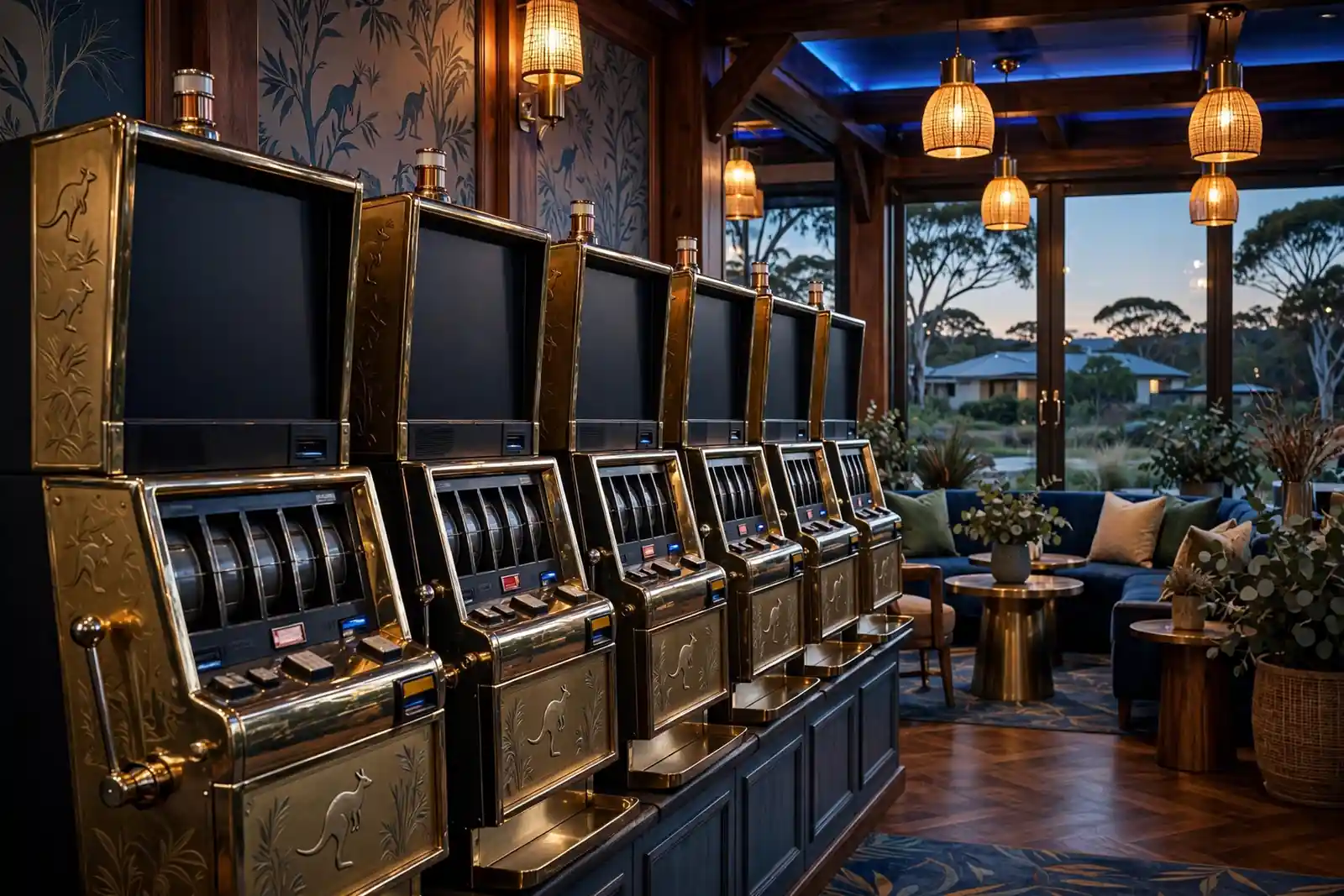
Sweet Bonanza provides a specific example of how a scatter-triggered bonus and multipliers can be described in measurable terms. It should not be treated as evidence that every game described as a seven-reel slot has the same layout or bonus rules. The relevant details are specific to this title, and any reported terms need to be read as version-dependent rather than as universal settings.
A specialist review reports that landing four or more scatter symbols awards 10 free spins. That gives the feature a defined trigger and a defined starting number of spins in the version described by that review. The trigger is the scatter count; the awarded spins form the bonus round. Those are separate parts of the mechanic, and the stated award should not be assumed to apply to every build or configuration of the game.
During free spins, multiplier bombs may appear. A specialist review describes their values as being added together before the resulting multiplier is applied to a winning tumble. In practical terms, the calculation has two stages: the bomb values are combined, and the combined value is applied to the qualifying tumble. This distinction matters because the described mechanic is not simply a separate multiplier attached to each bomb one at a time. The sequence is part of the bonus rules, not a promise that a tumble will win or that a multiplier will appear on a particular spin.
Choosing reel slots in Australia means finding a casino that fits your preferences and deposit plans. Use this list as a starting point, and check each operator’s terms before playing.
LevelUp Casino
LevelUp Casino lists a Curacao eGaming licence held by Dama N.V. Its minimum deposit is A$15.
Vegaz Casino
Vegaz Casino lists a Curacao licence. Its minimum deposit is EUR 20.
GoldenCrown
GoldenCrown lists a Curacao Gaming Control Board licence held by Hollycorn N.V.
Golden Pokies
Golden Pokies lists a Curacao licence.
SpinsUp
SpinsUp lists a Curacao Gaming Control Board licence held by Dama N.V.
SkyCrown
SkyCrown lists a Tobique Gaming Commission licence. Its stated payout speeds are around 10–15 minutes for crypto and 1–5 days for fiat; the minimum deposit is A$30.
Roby Casino
Roby Casino lists a Curacao eGaming licence held by Roby Games Ltd.
MrPacho
MrPacho states payout speeds of 30–120 minutes for crypto and 24–72 hours for fiat. Its minimum deposit is A$30.
Neospin
Neospin lists a Curacao Gaming Control Board licence held by Hollycorn N.V.
Bizzo Casino
Bizzo Casino lists a Curacao Gaming Control Board licence held by TechSolutions Group N.V.
The free-spin award and the multiplier calculation therefore describe different conditions. The scatter count determines entry into the feature and the number of spins awarded in the account reported by the specialist review. Multiplier bombs affect a winning tumble during the feature, with their values combined before application. Neither detail by itself establishes what a particular bonus round will return. The mechanics specify how qualifying events are handled; they do not set a fixed payout for the round.
RTP is another measurable term, but it describes a different aspect of the game. A specialist review reports an RTP of 96.51% for Sweet Bonanza, while also noting that versions may display a different figure. The reported percentage is therefore one published figure, not a guaranteed setting across every release or operator configuration. Comparing versions requires comparing the figure shown for the particular version, rather than carrying the 96.51% value across all appearances of the title.
That distinction is important when a feature description and an RTP figure are considered together. The free-spin rules describe when a bonus is awarded and how multiplier values are applied to a winning tumble. RTP is a theoretical return figure for a game configuration. It does not tell how many scatters will land in a session, how often multiplier bombs will appear, or what a particular bonus round will pay. Treating the two kinds of information as interchangeable would turn a description of rules into a claim about results.
For a seven-reel bonus-slot comparison, Sweet Bonanza can thus be used as a worked example of bonus terms, not as a template for every game with a similar label. The reported scatter threshold, free-spin award and multiplier sequence are title-specific details attributed here to a specialist review. The reported RTP figure is also source-specific, and versions may show another value. A list of bonus mechanics without those qualifications would conceal the central comparison issue: different versions can have different displayed RTP figures even when the game name is unchanged.
The measurable comparison is narrow but useful: the review reports four or more scatters for 10 free spins, multiplier-bomb values combined before they affect a winning tumble, and an RTP of 96.51% for the version it discusses. Each point answers a different question. The scatter count and spin award describe the trigger; the multiplier rule describes the treatment of a qualifying tumble; the RTP figure describes the reported theoretical setting. None should be extended beyond the version and source to which it relates.
The label “seven-reel” describes a category of casino game, but it does not change the basic statistical framework used to understand a spin. Whether a game is presented as a classic title or as a newer online pokies release, its displayed results come from random events. Its return to player figure, or RTP, is a separate measure: a theoretical calculation about performance across a very large number of spins.
An RTP figure describes an expected relationship between stakes and returns over millions of spins and is not a forecast for a short session.
That distinction matters because an RTP is not a forecast for a short session. It does not specify what a particular spin will pay, nor does it set a target that a game must reach during a player’s visit. The figure describes an expected relationship between stakes and returns when results are considered over a vast volume of play, often millions of spins. A few spins, or even a much longer individual session, cannot be treated as a miniature version of that calculation.
Online pokies use a Random Number Generator (RNG) to produce results. Each spin is a separate random event, not a step in a sequence that must balance out as play continues. A win does not establish that a loss is due next; a run of losses does not establish that a win is due either. The previous result supplies no reliable forecast for the next one.
RTP addresses a different question from the outcome of an individual spin. It summarises theoretical performance across an extensive set of results, rather than describing the order in which those results appear. That is why the term “expected” needs to be read carefully. In this context, it refers to a statistical calculation over a large sample, not an amount owed to a particular player or a promise of a return within a defined period.
The distinction applies across seven-reel slot games and other online pokies. Reel count does not turn randomness into a predictable sequence, and it does not make a theoretical percentage a session guarantee. The number displayed as RTP belongs to the game’s statistical description; the result of any single spin remains uncertain.
A theoretical RTP percentage expresses expected return in relation to stakes over the scale on which the calculation is meaningful. It can describe a game’s long-run statistical profile. It cannot say that a particular balance will rise or fall by a corresponding percentage, or that the same proportion will return over a specific series of spins.
The word “long-run” is not a timetable. It does not mean that results will steadily move toward the theoretical figure as play progresses. A sequence can differ substantially from that figure, because random outcomes do not arrive in a smooth, evenly spaced pattern. The calculation remains theoretical even when the game is played repeatedly; repetition does not turn it into a prediction of an individual session.
For instance, the RTP concept applies to a seven-reel classic slot just as it does to an online casino title with a different presentation. The label identifies the kind of game being considered, while RTP refers to aggregate theoretical performance. Neither term describes the next result. Treating the game’s category as a clue to its immediate behaviour would confuse the format with the mathematics.
Free versions of casino games can use the same terms, including RNG and RTP, but those terms still need to be interpreted as descriptions of random outcomes and theoretical performance. A displayed result in free play is an outcome of a spin, not evidence that a later result will follow a pattern. Likewise, an RTP figure is not a practical forecast for a short run of free spins.
A displayed result in free play is an outcome of a spin, not evidence that a later result will follow a pattern.
This applies to free seven-reel casino games and to versions accessed online: the format does not change what a statistical percentage means. The important separation is between an individual event and a calculation based on a vast number of events. Confusing the two can make a random sequence look more informative than it is.
A seven-reel slot machine, whether described as a classic or online game, therefore has two levels of description. The RNG accounts for how individual results are generated; RTP summarises theoretical performance across extensive play. One concerns the result of a spin. The other concerns a large-scale calculation. Neither supplies certainty about the next outcome.
That is the shared statistical context for seven-reel casino games. Reel terminology identifies the game format, while randomness and RTP describe different aspects of its operation. A spin is an uncertain event; a theoretical return is a measure across a much larger body of results. Keeping those measures separate prevents a long-run statistic from being mistaken for a promise about what happens next.
A published RTP figure provides a consistent starting point for comparing seven-reel games. It expresses a theoretical return across a very large volume of play, not the amount a particular session will return. A higher RTP indicates a better theoretical return over time than a lower one; it does not make a short session more predictable or turn a stated percentage into a personal outcome.
For a practical comparison, the useful question is not whether a game has the most impressive presentation or the longest feature list. It is whether its stated RTP clears a reasonable threshold and whether that figure can be confirmed in the game’s own information. A figure of 96% or higher is a sensible filter when assessing candidates. It is a screening measure, not a promise of results.
The distinction matters because a percentage can look precise while answering only a limited question. RTP is a long-run statistical measure. It does not say how much a player will receive in a particular sitting, how quickly any return might occur, or whether a session will finish ahead. Treating it as a session forecast would give the number a job it cannot perform.
When several 7-reel slots are under consideration, compare their published RTP figures on the same basis. A game listed at a higher percentage has the stronger theoretical return relative to one listed lower, all else being equal. That comparison is useful for sorting options; it is not enough to determine what will happen during actual play.
A simple assessment can use three checks:
This method avoids confusing a measurable feature with a prediction. If one game’s stated RTP is higher, the theoretical comparison favours that game over the long term. It does not follow that it will pay more in the next session, or even within a particular period of play. The published figure is a comparison tool, not a timetable.
The same approach applies whether a game is being considered in paid play or viewed in a free mode. The RTP remains a theoretical measure, and a displayed percentage should not be read as a forecast for an individual run. The key assessment is the figure itself and where it is documented, rather than the mode in which the game is opened.
A lobby description or a game’s name is not a substitute for the rules. The paytable is the appropriate place to confirm the RTP attached to the game. If the figure is not readily visible there, the comparison is incomplete; a remembered percentage or a number repeated elsewhere is a weaker basis for assessing the title.
This is particularly relevant when a list of games is labelled “best”. That word can imply a ranking based on performance, but without a verified RTP for each title, the ranking has no clear numerical basis. A game may be popular or visually distinctive, yet neither quality establishes a stronger theoretical return. For an RTP-based assessment, the published percentage is the relevant measure.
The term “seven-reel” also does not change how the RTP comparison should be made. Whether a title is described as a 7-reel slot or grouped among seven-reel slots, the same checks apply: locate the percentage in the rules or paytable, compare it with the chosen benchmark, and avoid treating it as a session estimate. The label identifies the category being assessed; it does not add predictive value to the number.
A sound comparison therefore stays modest. RTP can distinguish a stronger theoretical return from a weaker one across extensive play, and 96% or higher offers a clear benchmark for shortlisting. It cannot identify a guaranteed winner or calculate the result of an individual session. For any comparison intended to inform wagering, the in-game paytable is the point to verify before depositing.
A classic seven-reel slot label describes the kind of game being sought, but it does not establish the game’s return. For that, the relevant reference is the game’s own rules or paytable, where its RTP is usually displayed. The label and the figure answer different questions: one identifies the format; the other states a theoretical return under the configuration shown.
The paytable is therefore more useful than a title or a short game description when checking a classic slot’s published RTP. A lobby summary may identify a game without showing that figure. The rules or paytable provide the place to look for it, alongside the game’s other stated terms. If the RTP is absent from the material being viewed, the figure has not been confirmed by that material.
This check matters because “classic” is not a return rate. Nor does the number of reels establish how much a game returns. A seven-reel title may have a displayed RTP, but the format alone cannot supply it. Treating a familiar label as a substitute for the stated figure is a category error: appearance and return are separate pieces of information.
The paytable is the primary document for verifying a game's theoretical return; a lobby summary or game name is not a substitute for these rules.
A useful reading starts with the RTP entry itself. It should be identified as the figure attached to that game’s rules, rather than inferred from a name, theme or general description. The paytable is not decorative fine print; for this purpose, it is the document that carries the relevant number. Where multiple information screens or rule pages are available, the one belonging to the specific game is the pertinent reference.
The same distinction applies when a classic slot is viewed in an online format. A game’s presentation may make its category easy to recognise, while leaving its return figure elsewhere in the interface. The practical question is not whether the title looks like a classic seven-reel game, but whether the associated rules or paytable state an RTP. No figure should be attributed to a game solely because it belongs to that category.
This also limits what can be concluded from a free-play display. The interface may expose game rules, but the appearance of a title or a sample screen does not itself establish an RTP. The relevant stated figure remains the one shown in the game’s rules or paytable. A free-play context and the paytable perform different jobs: one presents the game for demonstration, while the other is where its theoretical return is usually recorded.
For a concise comparison of classic seven-reel titles, the useful entry is therefore the game name paired with the RTP shown in its own rules or paytable. If that figure cannot be located, the return remains unverified; filling the gap with an estimate would turn a check into guesswork. The format can narrow the type of game under consideration, but only the displayed game information can establish its stated RTP.
In Australia, real-money online pokies sit on the prohibited side of the legal framework. The Interactive Gambling Act 2001 makes it unlawful for operators to provide online casino games, including slots and table games, to people located in Australia. Australian-licensed operators cannot offer pokies online. The restriction concerns the service provider; individuals are not penalised simply for playing at an offshore site. Players must be at least 18 to gamble.
Sweet Bonanza is described in a specialist game review as available to Australian players only through offshore-licensed casinos. That describes access, not local approval: an offshore licence does not make an online casino lawful to provide to people in Australia or bring it within Australian consumer protections. Offshore operators sit outside those protections, and access is subject to active enforcement.
The Australian Communications and Media Authority (ACMA) enforces the Act and monitors compliance with federal interactive gambling laws. It can ask internet service providers to block websites that provide prohibited gambling services or advertise them in Australia. Following enforcement actions, ACMA has blocked more than 1,455 gambling and affiliate websites since November 2019. Blocking is a practical restriction on access, not evidence that a site is locally licensed or protected.
Reported withdrawal figures do not align. One account says more than 210 illegal services have left the Australian market since ACMA began enforcing the rules in 2017; another reports more than 190 over the same period. Both describe withdrawals, but the counts differ and should not be collapsed into a single settled figure.
Legal Warning
Under the Interactive Gambling Act 2001, it is unlawful for operators to provide online casino games, including pokies, to people located in Australia.
The financial terms reported for Sweet Bonanza also need to be kept separate from its legal status. A specialist game review gives a stake span of A$0.20 to A$100 per spin, while noting that the top stake depends on the operator. Those figures describe a reported product range, not a standard available at every site and not a recommendation to wager. A listed stake does not establish that an operator may lawfully offer the game in Australia.
For a seven-reel-style game played with real money, the decisive distinction is therefore between a game’s stated terms and the legal position of the service supplying it. A stake range tells what a particular configuration may permit; it does not certify the operator, provide Australian consumer safeguards, or remove the statutory restriction. Online casino advertising is also prohibited in Australia, so offshore availability should not be read as an invitation or endorsement.
The practical picture is narrow: Australian law bars operators from supplying online pokies to people in Australia, while ACMA has powers to pursue prohibited services and request website blocks. Offshore access may be encountered, but it is not equivalent to a locally regulated offering. The game’s price terms and the operator’s legal position are separate calculations, and only the latter determines whether the service is permitted to be offered in the Australian market.
A seven-reel slot game does not produce a sequence that can be read from its earlier results. Each spin is generated by a Random Number Generator (RNG) and is a separate random event, independent of spins before and after it. The reels may show a run of wins, losses or mixed outcomes, but that run does not establish what the next spin will show.
This applies whether the game is played on a physical-looking machine interface or on a screen. The visual presentation does not make outcomes repeatable. A near match, a cluster of losing spins or a previous win provides no reliable signal about the next result. Treating any of these as evidence of a pattern assigns predictive value to events that are independent.
The same distinction matters in free games and free-play versions of seven-reel slots. They can show the game’s presentation and allow spins without staking real money, but one outcome still does not determine another. A sequence that appears unusually favourable or unfavourable is a sequence of random results, not a record that can be used to forecast later play. Free play therefore does not turn the game into a repeatable test.
The phrase “slot machine” can suggest that a machine has a memory in the ordinary sense: that it remembers a loss and is therefore due to pay, or that a win makes another win less likely. That is not a sound inference from the game’s results. Under the stated RNG model, every spin is independent; the previous result does not create a debt, a bonus owed or a reason for the next result to change.
For a seven-reel format, the relevant point is not whether a run looks patterned to an observer. It is that the outcome of each spin remains random and independent of the run. The same reasoning applies when the game is described as a free slot machine game or as a free slot game with seven reels: changing the label or removing a stake does not make one spin a guide to the next.
A session can be reviewed as a record of what happened, but not as a forecast. Past results describe completed spins only. They do not make the next result more predictable, and no sequence of previous outcomes can establish what a particular machine will produce on its next spin.
“Without a download” describes a way of accessing a game, not a different kind of game. In general, the phrase contrasts playing through an online service with installing software on a device. It does not establish that a particular seven-reel title is available in a browser, that it works on every device, or that access is lawful in Australia.
That distinction matters for online pokies. Under the Interactive Gambling Act 2001, operators cannot provide real-money online casino games, including pokies, to people in Australia. Australian-licensed operators are therefore not a route to online real-money play. Offshore services may be blocked by Australian internet providers, and operators outside Australia do not fall under Australian consumer protections. The law places the prohibition on providers; individuals are not penalised simply for playing at an offshore site. Players must be at least 18.
A title described as a seven-reel slot still has the same basic statistical structure whether it is accessed through a browser or installed software. Online pokies use a Random Number Generator (RNG) to determine outcomes, and they have theoretical Return to Player (RTP) percentages. Neither “no download” nor “free download” says anything reliable about a game’s RTP, its outcome on a particular spin, or the terms attached to access.
The wording around downloadable games can also blur two separate ideas: installing software and playing without paying real money. A browser-based option is not necessarily free, and a free-play option is not proof that real-money access is available or permitted. Those are different questions, not interchangeable descriptions.
For Australian readers, the practical limit is clear: a search for a seven-reel game that can be played without installation does not change the legal status of online pokies. Nor does the absence of a download make an offshore service locally licensed or protected by Australian consumer rules. The access label describes a technical route; it does not settle the market conditions.
Free play can show the sequence of a game: how symbols appear, how a win is presented and what happens when a feature is activated. That makes it useful for understanding the interface and the rules in practice. It does not turn a run of results into evidence about what the next spin will produce.
Each spin is generated by a Random Number Generator (RNG) and is a separate random event. Earlier outcomes do not determine later ones, whether the play uses a free mode or real money. A run of wins in free play therefore does not establish that another run is likely, and a stretch without a win does not make one due.
Free play is a demonstration of mechanics and layout, not a forecast of how often specific events will occur in future play.
The distinction is important when using free versions of seven-reel games to assess their behaviour. A sample can demonstrate what the game displays when a particular event occurs. It cannot establish how often that event will occur in future play. Repeating spins does not change the independence of each result.
Free play is consequently a demonstration, not a forecast. It can answer practical questions about the layout and the way features are presented, but it cannot provide a reliable pattern to carry into later spins. The same reasoning applies to any apparent streak: its existence describes completed results only.
A sensible reading of a free session is narrow. It shows what happened in that session under its own random outcomes. It does not show that the game has learned from those outcomes, that a feature is closer to appearing, or that a later session will reproduce the same sequence. Treating the sample as a prediction assigns information to it that the results do not contain.
For anyone exploring seven-reel pokies without wagering, free play can make the mechanics easier to observe. Its evidential value stops there. The next spin remains a new random event, not a continuation promised by the previous one.
A game tile in an online lobby identifies the title, but it does not establish which RTP configuration is running. A specialist review reports that the operator selects the game build and that this choice is not shown on the tile. The displayed title alone therefore cannot confirm the return figure attached to a particular online game.
The relevant check is inside the game. Before wagering, open its information panel or rules and find the stated RTP. That is the point at which the configured figure can be checked, rather than inferred from a lobby description, a search result or a figure published for another version. If the panel does not show the RTP, the configuration remains unverified; a familiar game name does not fill that gap.
This distinction matters for seven-reel pokies as much as for other online titles. Two listings bearing the same game name need not provide enough information to establish that they use the same RTP build. The panel is tied to the version available in that session, while general descriptions may refer to a different configuration.
Free access does not change the identification step: the lobby tile still cannot confirm the build. For wagering, the practical sequence is to open the game, inspect its information panel, and verify the RTP there before placing a stake. A published figure elsewhere may help identify what to look for, but it is not a substitute for checking the version presented by the operator.
The phrases “seven-reel slot” and “seven-reel slots” differ mainly in number: one points to a single game, the other to games as a category. Neither phrase, on its own, establishes a special rule for how a game operates. The wording identifies the subject, not a separate class of outcomes.
A reel count should not be treated as evidence that spins follow a sequence or that one result influences the next. Each spin is generated by a Random Number Generator (RNG) and is a separate random event. Its result is independent of spins before and after it. A run of wins, losses or particular symbols therefore does not determine what the following spin will show.
This distinction matters when comparing a game’s label with its actual operation. The term “seven-reel” describes a feature of the game’s presentation; it does not change the independence of RNG-generated results. Nor does a plural description imply that several games share a predictable pattern. Each spin remains its own event.
The practical meaning is narrow but clear: singular and plural wording distinguishes one game from a group, while neither wording supports a claim about repeatable outcomes. Any expectation that a previous spin makes a particular next result more likely confuses the name of a game format with the mechanics of random results.
Australian-licensed operators cannot offer online pokies, but individuals are not penalised for playing at offshore sites. Sweet Bonanza is available to Australian players only through offshore-licensed casinos, which sit outside Australian consumer protection.
RTP helps compare a game's theoretical return over a vast number of spins, but it does not predict the result of a session. Check the in-game information panel, since the operator selects the RTP build and the lobby tile does not show it.
No. A higher RTP theoretically offers a better return over time, but each spin is random and independent, so RTP does not guarantee a win or a particular payout.
A higher RTP theoretically gives players a better return over time than a lower one, but it does not guarantee results in an individual session. Check the figure for the specific game version in its information panel.